8 Best At-Home Laser Hair Removal Devices Of 2026, Tested By Women's Health Editors
Our favorites include Braun and Epilaser.
 Reviewed by Brian UnderwoodBeauty Director

Women's Health may earn commission from the links on this page, but we only feature products we believe in. Why Trust Us?
Summer is still going strong and we’ve already planned our warm-weather vacation wardrobe. We’ve swapped out spring jackets for breezy dresses, sneakers for sandals, and treated ourselves to new sunglasses. With warmer weather comes shorter hemlines and stylish swimwear, which means we’ve been mulling over how to achieve the smoothest look year-round.
Disposable razors are convenient, but dermatologist Caroline Robinson, MD, says they can cause microscopic nicks and irritation. Waxing provides immediate results, but the upkeep and the pain of simultaneously ripping out dozens of hairs from our legs are as painful as it sounds. Enter at-home laser hair removal devices, which dermatologists and our hard-to-please editors swear by for their legs, bikini lines, underarms, and faces.
They zap unwanted hairs at their roots, significantly slowing regrowth and leaving skin smoother. While they don’t offer permanent hair loss, we’ve found the long-term effects are worth using one of these devices. After testing them for more than three years, we’re confident that you’ll also enjoy the long-term results they deliver. Most of these devices take anywhere from one to four weeks for initial results, and up to 12 weeks for full results to show. Starting now gives you enough time to ensure that you’re hair-free by your next vacation to these Travel Award-winning destinations.
Need more motivation to start now? It’ll take four weeks for visible results to show, which means if you start now then you’ll notice a difference by Labor Day Weekend, with better results by the time you enjoy a gorgeous fall wedding. So start your at-home laser hair removal treatments now, stay consistent, and by the time your next beach trip hits, you’ll forget what shaving even feels like.
Best Laser Hair Removal Devices
- Best Overall: Braun Skin i-expert
- Best Value:RoseSkinCo. OG IPL Hair Removal Handset
- Best More Affordable Braun Device:Braun Silk Expert Pro 5 IPL Hair Removal System
- Best For The Face And Body:Ulike Air+ IPL Laser Hair Removal
- Most Amazon Reviews: XSoul At-Home IPL Hair Removal
So what makes laser hair removal devices worthy of a spot in your busy routine? They have an upfront time commitment: you have to initially use one up to five times a week. But after a few months, your upkeep routine drops significantly to once or twice each season. They’re also more cost-effective than professional treatments. Hear us out: A laser that costs $500 is basically the same price as a professional hair removal session, and the results from that in-office treatment won't last forever, but you will continue using your at-home laser for years.
Ahead, we asked seven dermatologists about how to shop for laser hair removal devices and their no-fail product recommendations. They also answered your most burning questions in our FAQ section after our product highlights.
What to Consider
There are a lot of laser hair removal devices on the market, which is why you should consider a few of these pointers before investing.
Device Type
IPL and diode lasers both slow hair growth and reduce the thickness of individual strands by scanning for pigment and targeting the hair follicle, says dermatologist Melanie Kingsley, MD. But, they each have their benefits and limitations.
Intense Pulsed Lights (IPL)
IPL is the most commonly used type of light in at-home laser hair removal devices. This technology uses broad-spectrum light to target melanin, the pigment that gives your hair its color. The light is also unsuitable for dark and deep skin tones because it can’t distinguish between melanin-rich skin from the pigment of dark hair, says dermatologist Rachel Nazarian, MD. However, if you have a fair to olive complexion with dark hair, then you’re an ideal candidate for IPL treatments.
Diode
Until recently, all at-home laser hair removal devices were IPL lasers. But Epilaser has a game-changing laser for home use. Unlike IPL lights, which emit a broad-spectrum of light ranging from 400 to 1,400 nm, diode lasers are unique because they use a more concentrated wavelength of light (around 810 nm). This precise wavelength means it can better target the hair follicles rather than accidentally burning your skin, making it more accessible for some people with darker complexions.
What does this mean for you?
Both are effective, but diode lasers are slightly more versatile. That said, no matter which one you go with, you’ll need multiple treatments to maintain your hair-free results.
Features
Flashes
One of the biggest considerations is the number of flashes a device is equipped to deliver. This number indicates how long the device will last, according to Dr. Nazarian. "Many devices contain about 200,000 flashes, which is typically good for more than 15 years, although it also depends on how many areas you’re treating," she says. Other recommendations on this list, like the Smoothskin, have unlimited flashes, which means they'll theoretically last forever, but are pricier.
Continuous Flashes s Single Flash
- A single flash emits one pulse of light, providing greater control and precision to smaller areas, including your face and underarms. The short pause between flashes allows your skin to cool down, which helps prevent irritation.
- Continuous flashes are fast, repeated pulses of light that removes unwanted hair quickly, making them ideal for larger areas like your legs.
Intensity Modes
Extra features like multiple intensity modes—lower options for sensitive skin; higher settings for those who want to see results fast (see the Nood)—or interchangeable heads for precise treatment all over the body (hi, Braun) can increase the price. The amount you spend comes down to the features you want in your device and how long you want it to last.
Cooling Capabilities
One of the best ways to reduce discomfort during laser hair removal is to use cooling technology. It lowers your skin’s temperature—before, during, and after each laser pulse—to help you better tolerate longer and higher treatment settings safely.
Treatment Area
Devices with bigger heads are more efficient on large areas. For more targeted flashes, opt for rigs with compact heads, such as the Iouniya Laser Hair Removal, which can be used on both the face and body. If you have sensitive skin, consider stretching your treatments out to once a month to start and gradually up the frequency once your skin can handle the laser hair removal treatment. The final hair-free results will take longer to achieve but at least you won’t risk irritating your skin. FWIW, she says you’ll notice thinning hair after your first four treatments.
Once you choose your device, know that it can take some time to see results. While every device is different, you’ll probably use it weekly anywhere from four to 10 weeks before noticing lasting results, says dermatologist Bertha Baum, DO. The final results might take longer to achieve, but you won’t risk irritating your skin. FWIW, warm weather likely won’t return until April or early May meaning you’ve got several weeks to achieve smooth results. Either way, Dr. Baum says you’ll notice thinning hair after your first four treatments.
Price
This technology has come a long way and, while pricey, it's a long-term investment that pays for itself. Think of it this way: A laser that costs $500 is basically the same price as a professional hair removal session, and that in-office treatment won't last forever but you will continue using your at-home laser for years. And FWIW, we found a few discounted, top-rated Amazon picks that start at just $42, but you’ll want to hurry since these are fleeting deals.
How We Chose
At Women’s Health, we prioritize hands-on editor testing to ensure you don’t waste your time or money. Ahead, is insight on what went into our editorial process while trying the latest and greatest at-home laser hair removal devices.
Editor-Tested for Over 3 Years
After testing these devices since February 2022, beauty director Brian Underwood, deputy deals and trends editor Eunice Lucero-Lee, and luxury commerce editor Sarah Maberry whittled down this list to 12 of the best laser hair removal devices. We also tapped contributors Jasmine Gomez, Lily Wohlner, and Brigitt Earley to ensure these devices work across most skin tones.
They all boast impressive features, are comfortable to use, and offer incredible value. Plus, these picks are FDA-cleared, so they’ve been evaluated for safety and efficacy. Several dermatologists also shared their no-fail laser hair removal tips and best in class product recommendations.
We Tried Price-Conscious and Splurge-Worthy Picks
And because we know what it’s like to ball on a budget, we also considered pricing. TBH, Laser hair removal devices aren’t exactly cheap. Many cost between $300-$600, especially when shopping from these expert-approved devices from well-respected brands, such as Braun.
To help, I carefully researched dozens of other cheaper, yet top-rated Amazon laser hair removal devices. Ultimately, I found four Amazon picks that are aligned with expert guidance and are currently discounted as low as $35. Talk about major savings! For added peace of mind, they all earned thousands of rave reviews from real Amazon customers.
So if you're ready to ditch daily shaving and bi-monthly waxing, we're confident—based on our own testing and our dermatologists' advice—that this list contains only the best, most effective options on the market worth your hard-earned coins.
 Best Deal


Braun Skin i-expert


Braun Skin i-expert
Pros
- Compatible smartphone app guides you through the entire process
- Comes in a sturdy carrying case
- Provides results in just one use

Cons
- More expensive than other devices

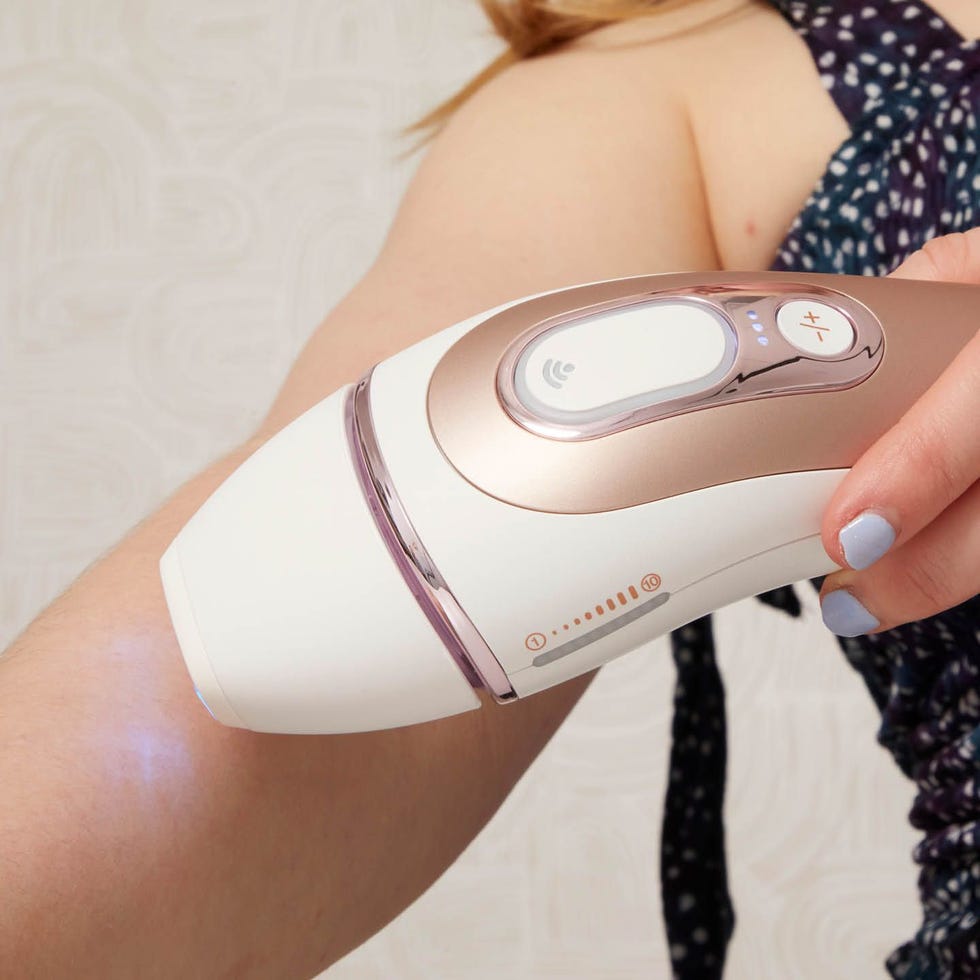
Meet the Skin i-expert, a Braun laser hair removal device that we’ve been testing since January 2024. Given our long-term positive experience using this tool, we knew it was the clear winner of our best overall distinction.
For starters, most laser hair removal devices have about 200,000 flashes or the equivalent of 780 at-home treatments, Dr. Nazarian previously told us in our guide to the best facial hair removal devices. This IPL device has double that, aka 1,560 treatments, meaning the investment will last for several years even with consistent use. Each hair removal sesh will only cost you $0.31, which is a third of the price of a wet n wild eyeliner.
Next, it’s our only recommended device that connects to a compatible smartphone app via Bluetooth and Wi-Fi technology to tailor your treatment to your needs. Wohlner was impressed with how well the intuitive app assessed her skin tone and hair color for compatibility.
Wohlner admits that she never used interchangeable heads before because they were intimidating. However, Braun solved that problem because the app told her what head to use for different parts of her body. The software even analyzes how much coverage Wohlner needs to ensure she doesn't miss any spots. Lastly, the app has a built-in calendar, so she’ll always remember when she’s due for some zaps—something Wohlner admits can be hard to keep track of, but is key for results.
Like other Braun laser hair removal devices we've tried, this one comes in a sturdy carrying case that keeps everything neatly organized under your vanity, or wherever you choose to store it. The unit doesn't call out any specific cooling technology, but Wohlner said her experience was largely pain-free. "I felt a little zippiness here and there, but nothing I could actually describe as painful—more like a super quick, tiny pinch," she says.
As for the results, they were solid. Wohlner typically shaves her self-described super coarse hair daily until she started using this device. She was impressed that she didn’t need to shave her underarms for weeks after her first treatment. "After three more sessions, I saw a pretty major payoff,” says Wohlner. “There are definitely a few hairs still popping through, but they've grown back so slowly."
Overall, this device is pricey, but for someone serious about tackling the hair on their body—whether armpits, legs, Brazilian, and beyond—it's worth every penny, especially if you feel like you could use a little help through the process.
Truly the only thing we don’t enjoy about this device is the price tag. However, it has 400,000 flashes—double the average of our other favorite devices—which means this Braun can easily last you 30 years. Genius!
Read more: Best Hair Mask
| Flashes | 400,000 |
| Levels | 10 intensity levels |
| Type | IPL |
| Skin Tone | Best for light to medium skin and dark hair |
Braun Silk Expert Pro 5 IPL Hair Removal System


Braun Silk Expert Pro 5 IPL Hair Removal System
Pros
- Self-adjusts intensity levels based on your skin tone
- Has a continuous flash option to speed things up
Cons
- More limited features than our top pick
If you can't stomach the price of Braun's latest and greatest IPL, the brand’s cheaper Silk Expert Pro 5 is hardly a downgrade. In our comprehensive test, Earley found the device to be both easy to use and highly effective.
The Silk Expert Pro 5 removes all of Earley’s unwanted hair after just four weeks of use. "I was so happy to say goodbye to my leg and armpit hair,” says the working mom of four. “Anything that saves me time—and trust me, not having to shave is a huge time-saver—is something I'm 100% willing to invest in." The ergonomic handle is easier to hold than the bulky, cheaper alternatives that remind her of hair dryers. For larger areas of her body, Earley holds down the trigger for continuous flashes—a feature she says speeds things up immensely.
Compared to our best overall pick, the Silk Expert Pro 5 lacks convenience features like a compatible smartphone app that allows you to tailor your treatments and track coverage areas to make sure you don't miss any spots. It does, however, have a proprietary SensoAdapt technology, which uses a built-in sensor to continuously and automatically read your skin tone and self-adjusts the energy setting for safety and efficacy just like its more expensive counterpart.
Overall, it's a worthy pick—as evidenced by Earley’s testing experience and its popularity on Amazon and TikTok—if you're looking to spend a little bit less and don't mind sacrificing a few features.
| Flashes | 400,000 |
| Levels | 10 intensity levels and 3 power modes |
| Type | IPL |
| Skin Tone | Best for light to medium skin with dark hair |
Ulike Air 10 Laser Hair Removal

Ulike Air 10 Laser Hair Removal
Pros
- Aamazon's no. 1 best seller
- Cooling feature ensures comfort while removing hair in delicate areas
- Size of flash window is ideal for areas both large and small
Cons
- Not compatible with deeper skin tones
We’ve been testing and liking Ulike devices since 2022. From the ULike Sapphire Air+ to the Air 3, and now the featured Air 10 is the brand’s latest model worth owning.
Instead of buying two devices, the Air 10 works quite literally from your face to your toes. The latest version is equipped with dual lights to zap hair on your upper lip, bikini area, underarms, and legs. It offers four modes, including a new setting for stubborn hairs. The gentle intensity setting zaps hair from the face, while the strongest mode uses high-speed flashes to speed up removing unwanted face and body hair.
But we like most is that Air 10 is easy to use and relatively pain-free. While other devices use heat to remove hair, the Ulike Air 10 cools itself down to 65 degrees Fahrenheit. This chilly surface helps lower your skin temperature to prevent irritation and burns from overheating. Maberry says the cooling tech found in both the Air 3 and Air 10 models is especially useful for sensitive areas like the bikini line.
It’s also a relatively low time commitment of 20 to 30 minutes for a full treatment while watching TV. "Once you get the hang of how to use the device, it's super easy to zap, zap, zap while you scroll through TikTok,” Maberry said in her review. Ulike promises visible results within four weeks, but Maberry saw her hair thin in just three weeks. The hair-free appearance was so dramatic around week six that Maberry was tempted to stop the treatments entirely. She continued using it for the recommended 12 weeks and now hairs only pop up every four to six weeks.
One thing to note: the built-in cooling fan is a bit nosy, so Maberry turns up her TV volume slightly. Still, the tradeoff isn’t a real dealbreaker: "I would rather have a painless device that makes little noise than a silent one that causes a burning sensation," she said. It’s also worth mentioning that this device is best suited for someone with fair to olive complexions and brown to black hair. The tech can’t accurately differentiate between a deeper skin tone and dark tresses.
| FDA-Cleared | Not listed |
| Levels | 4 modes; including an auto-sensor |
XSoul At-Home IPL Hair Removal

XSoul At-Home IPL Hair Removal
Pros
- Includes safety goggles and 2 razors
- Multiple levels for your body and face
Cons
- The bulky shape is a tad cumbersome
This budget-conscious device seems a little too good to be true, but it earned a casual 4-star average from nearly 12,900 Amazon reviews. More than 7,330 of these reviews are a perfect 5-star rating. Not too shabby! Shoppers rave about using this IPL device on their face and body, including the ultra-sensitive bikini line.
Like other laser hair removal devices, this IPL tool features a manual mode that emits a single flash at a time to precisely target areas, like the chin, upper lip, and armpits. There is also auto mode that emits continuous flashes for the legs, stomach, and arms. And FWIW, this device comes with an epic 36-month warranty and 100 day money back policy, which is more than triple the regular return window of other Amazon beauty products.
The main complaint about this price-friendly tool is that it’s bulky, making it less ideal for travel. However, it does boast an ergonomic design for an overall comfortable hair removal experience. And since each treatment area requires a maximum of two minutes or less, you won’t have to worry about any discomfort for your wrist.
| How To Use | 999,999 |
| Levels | 9 |
| Skin Tone | Fair to tan complexions |
| Type | IPL |
Epilaser 808

Epilaser 808
Pros
- Relatively painless
- Cordless
- Includes a protective travel case
Cons
- It’s the most expensive pick
If you’re like us, then you’re probably a bit surprised that an at-home laser hair removal device can be so costly. However, we put this one to the test for nearly two months and saw major results. Based on our long-term testing experience, Epilaser’s effective tech, and the sophisticated design and feel, we knew it was deserving of a spot on this list. We adored it so much that we featured it as one of the best beauty launches of 2025 in our annual Skincare Awards package.
Our deputy visual director, Dangi McCoy, used this laser two to three times a week for two months on her right underarm to compare the results. She noticed the treated area regrew hair more slowly, and had half the amount of underarm hair compared to her left side. “At seven weeks, I’m still using the laser, but the regrowth has been so sparse I could count the hairs at a glance,” McCoy said in her Epilaser review.
Notably, this is the only featured device that use diode lasers for hair removal. As a quick reminder, using the wrong laser type, aka IPL, can cause burns in dark brown and deep skin tones. Thankfully, the Epilaser’s diodes prevent this from happening. The device’s unique laser wavelength bypasses the melanin that gives our skin its pigment, allowing it to safely remove hair rather than mistaking our skin for dark hair.
Epilaser is also extremely functional when you have limited outlets in your home or hotel room. During McCoy’s testing process, she found some of the cords to be cumbersome, so it was nice to have the flexibility of charging her device and using it cordless. It also allowed McCoy to remove hair from anywhere in her home, such as the couch while watching Uptown Girls.
OK, so what about the discomfort? Is splurging really worth it in this case? Turns out, yes! Epilaser maximizes hair removal results even if you have a low tolerance for discomfort. While no laser hair removal device is completely painless, McCoy only felt occasional quick pricks on her skin. The brand’s proprietary SPOT technology zaps up to 15 hairs per second, while leaving your skin untouched.
She was also impressed by how lightweight the cordless Epilaser felt in her hands. The device feels sturdy, and its ergonomic design enhances comfort during longer treatment sessions. Plus, this laser hair removal device looks absolutely gorgeous IRL—the bronze-tone trim truly elevates the luxurious appearance.
Given the laser’s smaller opening, you can even use this device on your face. It also comes with a soft-sided travel case with a short handle strap that’s easy to pack in your carry-on or rolling suitcase.
| Flashes | Unlimited |
| Levels | 3 |
| Type | Diode |
| Skin Tone | Light to medium skin |
SmoothSkin Pure Intelligent Hair Remover


SmoothSkin Pure Intelligent Hair Remover
Pros
- Unlimited flashes for a long shelf-life
- Automatically selects the light best suited to your skin tone
Cons
- Not totally painless
Smoothskin's system works for anyone who wants something that's easy to use and doesn't require a lot of manual work or tinkering with buttons or various features. A patented sensor measures your skin before each flash and automatically selects the light best suited to your skin tone. This helps speed up the whole process, so full-body treatments take approximately 10 minutes.
It also includes a precision head to target smaller areas of the body—like the bikini line or even the upper lip or chin. The adaptable head also makes it easier to follow along your natural curves, like your kneecaps or underarms.
Like other great laser hair removal devices on the market, this one promises visible hair reduction in as little as four weeks and complete results by 12 weeks. It works so well that you’ll notice a difference after just one use, which is a true testament to this laser's power. SmoothSkin is on the pricey side, but justified by the fact that it offers unlimited flashes, allowing you to use this device for life. Overall, an excellent value over its lengthy lifetime. No wonder it earned 250 5-star Amazon reviews.
| Flashes | Unlimited |
| Levels | 3 intensity levels |
| Type | IPL |
| Skin Tone | Best for tan to ivory skin with dark blonde to black hair |
Nood The Flasher 2.0

Nood The Flasher 2.0
Pros
- Easy-to-read digital display
- Comes with a 90-day guarantee
Cons
- Large flash area isn't ideal for smaller spots on the body
You've probably seen this popular laser hair removal device on your social media feeds, and our team says it really does live up to the hype. Nood’s proprietary PrecisionPulse laser makes all of the difference. The IPL flashes every 10 milliseconds, meaning it exposes your skin to less light that could accidentally cause burns.
Nood’s combination of continuous flashes and larger window make it better suited for larger areas, especially the legs. You can polish them off in 15 to 20 minutes, though it's harder to target smaller areas, like the upper lip. We also love the large digital display on this model.
It makes it very easy to toggle through the seven different intensity levels, and it's always clear which one you're working on. The price is friendlier than some other options, plus the brand offers a 90-day money back guarantee, which makes this device a great option for anyone on the fence about at-home laser hair removal.
| Flashes | 600,000 |
| Levels | 7 intensity levels |
| Type | IPL |
| Skin Tone | Best for light to medium skin and dark hair |
RoseSkinCo. OG IPL Hair Removal Handset

RoseSkinCo. OG IPL Hair Removal Handset
Pros
- Chic ergonomic design
- Only requires four treatments
Cons
- Power cord is a bit short
At $149, RoseSkinCo. is one the most affordable options on this list, so you’ll have enough funds leftover to treat yourself to some new fall beauty essentials, like a velvety smooth face cream.
Similar to other costlier devices, RoseSkinCo. utilizes IPL technology to address unwanted hair. And while you’ll typically expect fewer features given the budget-conscious pricing, it even boasts an ergonomic design like the $400 Braun Silk Expert Pro 5. Both devices are helpful for achieving hair-free pits and legs, but RoseSkinCo. is only a third of the price, cementing it's place as our best value pick. This tool also boasts five intensity levels, allowing you to start slowly and build up a pain tolerance at your own pace.
Following 12 treatments, you may notice fully dolphin-smooth legs. If your results aren't top-notch, they offer a one-year warranty, so you can return the device for a full refund at any time during that refund window.
| Flashes | 300,000 |
| Levels | 5 intensity levels |
| Type | IPL |
| Skin Tone | Best for dark to medium skin with dark hair |
Meet the Experts
- Rachel Nazarian, MD, is a board-certified dermatologist in New York City.
- Corey L. Hartman, MD, is a board-certified dermatologist in Birmingham, Alabama.
- Bertha Baum, DO, is a board-certified dermatologist and cosmetic surgeon in Boca Raton, Florida.
- Azadeh Shirazi MD, is a board-certified dermatologist in La Jolla, California.
- Melanie Kingsley, MD, is a board-certified dermatologist in Carmel, Indiana.
- Caroline Robinson, MD, is a board-certified dermatologist in Chicago.
Are at-home laser hair removal devices safe?
Dr. Nazarian confirms at-home laser hair removal devices are generally safe and effective, citing a 2019 paper. The biggest challenge with many at-home devices comes down to their inability to differentiate between dark skin and dark hair due to their pigmentation. Dr. Nazarian cautions that melanin-rich complexions risk absorbing too much laser energy that increases the risk for burning. . If this is you, then see your dermatologist for a recommendation on the best laser hair removal treatments and devices.
It's also a good idea to do a patch test and not expose the treated area to sunlight for a week, says Dr. Shirazi. Your treated skin is temporarily more sensitive, and you risk sunburn, hyperpigmentation, and delayed healing. She also doesn’t suggest using the laser on tanned and tattooed skin, open wounds, moles, or birthmarks to avoid changing their appearance or cause accidental burns.
Truthfully, they're not optimal for sensitive or dark skin. Many at-home devices cannot distinguish between melanin-rich complexions and dark hair, says dermatologist Corey L. Hartman, MD. Anyone else can still give them a try.
And, like with salon treatments, it's important to practice patience—this isn't a "one and done" situation. Many devices need to be used multiple times weekly to achieve the initial results. Plus, each at-home session can take 10 to 60 minutes, depending on how much body and facial hair you plan to remove. While a tad annoying upfront, this minor inconvenience has a major payoff because your hair will regrow back slower over time with regular use.
Are at-home laser hair removal devices effective on dark skin?
Truthfully, they're not optimal for sensitive or dark skin. Many at-home devices cannot distinguish between melanin-rich complexions and dark hair, says dermatologist Corey L. Hartman, MD. Anyone else can still give them a try.
And, like with salon treatments, it's important to practice patience—this isn't a "one and done" situation. Many devices need to be used multiple times weekly to achieve the initial results. Plus, each at-home session can take 10 to 60 minutes, depending on how much body and facial hair you plan to remove. While a tad annoying upfront, this minor inconvenience has a major payoff because your hair will regrow back slower over time with regular use.
Shop More Editor-Tested Beauty Products
Best Hand Cream | Best Red Light Therapy Tools | Best LED Face Mask | Best Moisturizer For Mature Skin | Best Electric Razors for Women | Best Hair Removal Creams | Best Hair Epilators | Best At-Home Waxing Kits | Best Bikini Trimmers | Best Women's Razors | Best Face Razors for Women | Facial Hair Removal Tools | Butt Hair Removal
Additional reporting by Brigitt Earley and Lily Wohlner.
Nicole Saunders is the beauty editor at Women's Health and has nine years of experience researching, writing, and editing lifestyle content. She specializes in breaking down complicated topics, like red light therapy for hair growth and LED face masks, into easy-to-understand guides. Saunders takes great pride in heavily researching and testing featured beauty products, such as strengthening shampoos and body washes for dry skin on our site.
Previously, she was the beauty editor at Best Products where she tested quite literally thousands of launches for her quarterly column and the Best New Beauty Awards package. She also launched the beauty and wellness coverage at NBC News and contributed to CNN, Cosmopolitan, Billboard, The Hollywood Reporter, and Harper's BAZAAR.
You can follow her on Instagram to stay in the loop on her product testing adventures.
Brian Underwood is beauty director at Women’s Health, where he oversees content strategy for the brand across all platforms, including digital, print, and social. Underwood previously served as beauty and wellness director at Oprah Daily and O, The Oprah Magazine. During his tenure leading beauty content for the Oprah brand at Hearst, stories Underwood commissioned were awarded the Skin Cancer Foundation Media Award and a Fragrance Award for Editorial Excellence (his second). He was the launch Beauty Director of Dr. Oz THE GOOD LIFE, and has held additional editorial positions at Fitness, Organic Style, Good Housekeeping, Life & Style Weekly, and Woman’s Day and has written for Self, Shape, Seventeen, Redbook, Cosmopolitan, and many more. Underwood previously served on the Skin Cancer Foundation’s gala committee and as partnerships director of the Trans Beauty Clinic, a New York-based charitable organization that provided beauty services and workshops to the city’s trans community.

Best Electric Razors For Women In 2026, Per Derms

These Hand Creams Fixed My Rough, Dry Hands

This Is Why Your Scalp Is So Itchy

How To Cope With Health Anxiety, Per Psychologists