The 7 Best Sunscreens For Tattoos, According to Dermatologists
Your tattoo will thank you later.
 Reviewed by Christian GollayanStyle and Reviews Director

Women's Health may earn commission from the links on this page, but we only feature products we believe in. Why Trust Us?
Your tattoos are works of art that stick around for life, so don’t let the sun wash them out. “Sun protection is probably one of the most important things you can do to keep a tattoo looking vibrant over time,” says dermatologist Kseniya Kobets, MD. “Tattoo ink sits deeper in the dermis where ultraviolet A rays can penetrate, and repeated UV exposure can gradually break down those pigment molecules in a similar way to how sunlight fades a colored poster or fabric left by a window.”
Over time, your tattoos will look less saturated, washed out, and potentially less crisp. A sunburn can also cause peeling and blistering, which is why all eight dermatologists I spoke with advise using sunscreen for tattoos. The doctors shared two tattoo-specific SPFs worth using. They also argue that a regular sunscreen also works. Just like any great sunscreen, make sure to look for one that’s broad-spectrum, offers at least SPF 30 coverage, is water-resistant, doesn’t leave behind an ashy finish, and blends with ease.
Best Sunscreens for Tattoos
- Best Overall: La Roche-Posay Anthelios Melt-In Milk Sunscreen SPF 100
- Best Budget: CeraVe Mineral Sunscreen SPF 30
- Best Stick Formula: Hustle Butter Mineral Sunscreen Stick SPF 50
- Best Lightweight Sunscreen: Supergoop! PLAY Everyday Lotion SPF 50
- Best Spray: Coola Sunscreen Spray SPF 30
What to Consider
Does Broad-Spectrum Sunscreen Work for Tattoos?
Protect your skin from the sun’s ultraviolet A (UVA) and B (UVB) rays, which cause signs of aging and burning, respectively. Using a broad-spectrum sunscreen helps guard your skin against both types of rays.
How Does a Sunscreen's SPF Protect Tattoos?
All of the dermatologists I chatted with advise applying a broad-spectrum SPF 30 or higher for everyday wear. But what exactly does SPF 30 mean? It stands for sun protection factor. Sunscreens offering SPF 30 indicates that UVA and UVB rays take about 30 times longer to penetrate your skin than if you weren’t wearing sunscreen, according to the Skin Cancer Foundation. Their suggestion also aligns with guidance from the American Academy of Dermatology and the Skin Cancer Foundation.
Is Water-Resistant Sunscreen Better for Tattoos?
When ordering sunscreens for tattoos, you should also consider your lifestyle. All of the experts I spoke with suggest using sweat- or water-resistant sunscreen. SPF should be reapplied at least every two hours, immediately after towel-drying, and after 40 or 80 minutes of swimming or sweating, depending on the label.
Sunscreens for Tattoos: Mineral vs. Chemical
All eight dermatologists I spoke with prefer mineral sunscreen containing active ingredients such as zinc oxide or titanium dioxide, especially if you have sensitive skin. Mineral sunscreens, sometimes called physical sunscreens, help reflect UV rays from the skin, dermatologist Divya Shokeen, MD, told us in our guide to mineral SPFs.
They’re also the gentle and are well-tolerated by most skin types. Mineral sunscreens also provide instant broad-spectrum protection against the sun’s UVA and UVB rays, making them an easy choice, dermatologist Caren Campbell, MD previously told us.
What Sunscreen Features Are Best for Tattoos on Brown and Black Skin?
That doesn’t mean chemical sunscreens made with avobenzone, homosalate, octisalate, or octocrylene are off-limits. "Chemical sunscreens absorb UV rays and then convert them into heat energy that's then released from the skin," Dr. Shokeen previously told WH. Chemical SPFs also blend more easily into Brown and Black skin because they don’t leave behind a dreaded white cast as some mineral SPFs do. To avoid an ashy finish, try a clear sunscreen that goes on invisibly, such as Supergoop! Play.
How We Chose
I talked to eight dermatologists about the sunscreens for tattoos they recommend. Some are specifically for body art, like Mad Rabbit and Hustle Butter. While others are regular lotions and spray sunscreens suitable for year-round application on your ink and untatted skin. The pros say it’s less about the brand names and emphasize the quality of ingredients, application, and reapplication as key factors worth considering.
FWIW, Dr. Granite namechecked brands like La Roche-Posay, Coola, and Supergoop! as solid options. I took things further by actually testing several sunscreens from each company to determine the best option for your tattooed skin. I kept active and other skin-nourishing ingredients in mind, along with how long it takes to rub into the skin, lack of white cast, and feel.
I also factored in how frequently each SPF needs to be reapplied, along with different formulation types like lotions versus sticks. I skipped powder sunscreens because those simply don’t provide enough coverage on their own and are best suited as SPF makeup as scalp sunscreen that doubles as dry shampoo.
Lastly, I considered pricing. While I adore my Isdin sunscreen and namecheck it in pretty much every piece of sunscreen content I’ve written, I skipped it this round to keep everything around $35 and under.

Pros
- Highest SPF coverage
- Works on the face and body
- No white cast
- Doesn’t irritate my eczema-prone skin
- Water-resistant for up to 80 minutes
- Antioxidant protection
- Available in 2 sizes: 3 oz, 5 oz

Cons
- It’s heavier than other SPFs, but it blends easily

You need to be putting on a shot glass's worth on sunscreen from head to toe, and that's especially important if you're rocking ink. La Roche-Posay makes application easy because it’s a moisturizing lotion that absorbs quickly and doesn’t leave behind an ashy finish on tatted skin.
That’s why I like using this sunscreen, which offers SPF 100 coverage and blocks 99% of UVB rays that cause sunburns, said dermatologist Neera Nathan, MD. It’s what I’ve been using throughout the summer in NYC and visiting family in sunny Florida. I even brought La Roche-Posay on a recent trip to Barbados, and with regular reapplication, I didn’t get sunburned.
Despite its white color, this one blends out easily. La Roche-Posay won’t camouflage your vibrant or dark body ink, which is always a win.
It’s packed with the brand’s signature Cell-Ox Shield technology, which combines broad-spectrum filters with senna alata to protect against free radical damage. That’s helpful since UV exposure can trigger oxidative stress which may contribute to skin damage and tattoo fading over time.
This SPF is packed with antioxidant-rich vitamin E, dimethicone to reduce water loss, hydrating glycerin, and panthenol to soothe and moisturize the skin. A bonus: It’s enriched with the brand’s mineral-rich thermal water from, where else but La Roche-Posay, France.
It also saves money. Hear me out: Anthelios Melt-In Milk Sunscreen retails for $27 on Amazon. It can be applied to both the face and body, so it’s like getting two sunscreens for the price of one.
Read More: Best Face Sunscreens
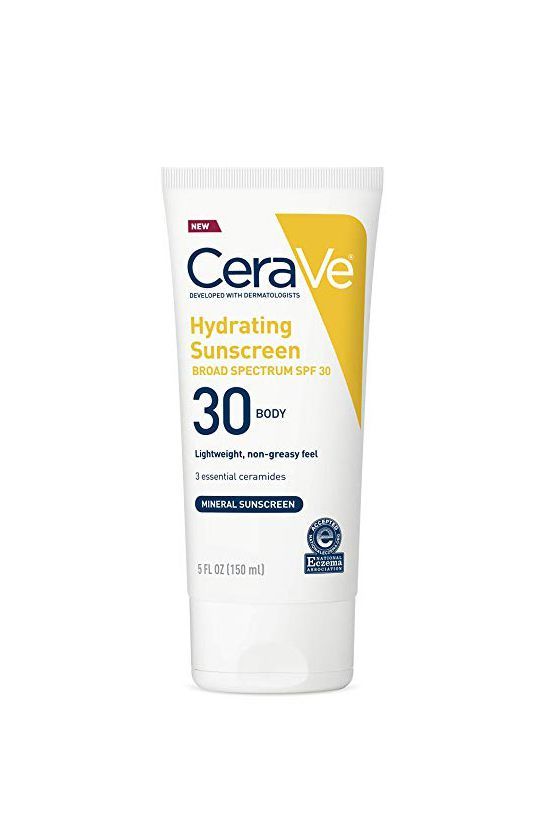
CeraVe Mineral Sunscreen SPF 30
CeraVe Mineral Sunscreen SPF 30
Pros
- Inexpensive
- Lightweight and non-greasy
Cons
- Leaves a subtle white cast behind
TBH, most of the sunscreens specifically for tattoos we see online are just marketing hype. And this drugstore pick is proof you don't need to fall for the markup. The mineral sunscreen is readily available at a fair price, yet is lightweight, non-greasy, fast-absorbing, and offers SPF 30 protection. Check, check, check, and check again.
The mineral sunscreen is readily available at a fair price, yet is lightweight, non-greasy, fast-absorbing, and offers SPF 30 protection. Plus, it earned the Eczema Association's seal of approval, which is comforting if you also deal with itchy flare-ups.
Just remember that if you’ve got tan to deep complexions, this probably isn’t the right fit for you since it leaves behind a subtle white cast.
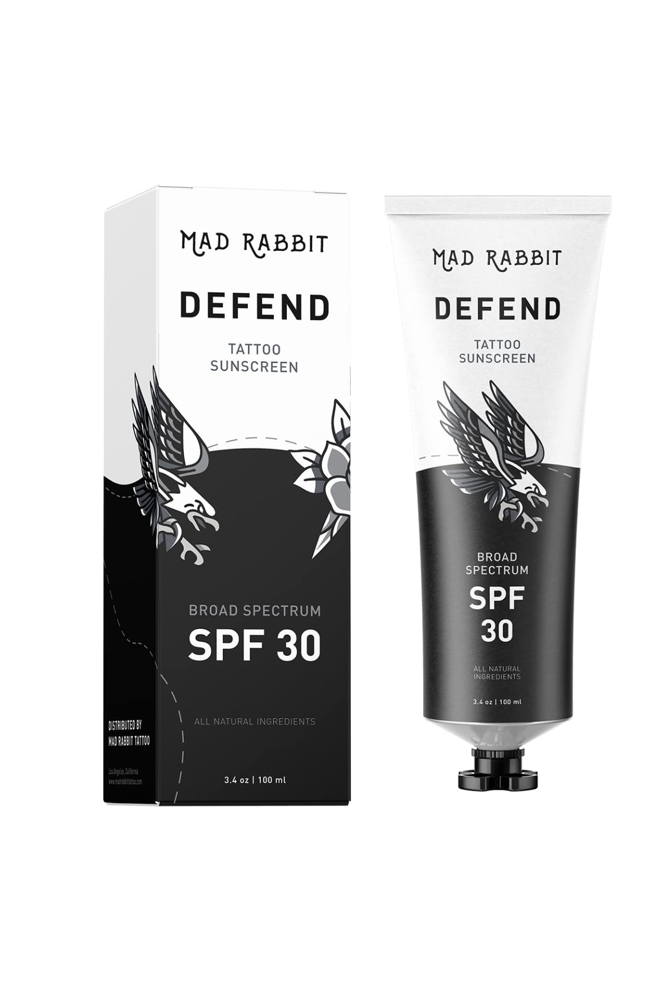
Mad Rabbit Defend Tattoo Sunscreen SPF 30
Mad Rabbit Defend Tattoo Sunscreen SPF 30
Pros
- Also contains skin-nourishing ingredients
- Non-greasy formula
Cons
- Expensive
If you're set on a dedicated tattoo sunscreen, dermatologist Dendy Engelman, MD, of Shafer Clinic in NYC recommends this one by Mad Rabbit. It's expensive, yes—that's the downside of tattoo sunscreens. But you can be sure it's designed for the ink you cherish. Mad Rabbit helps moisturize your skin, which helps tattoos appear more vibrant.
The broad-spectrum SPF 30 sunscreen is powered by zinc oxide to shield against UVA and UVB rays. It also contains antioxidant-rich ingredients, fatty acids, aloe vera, chamomile, and carrot extract to nourish your skin while protecting against sun damage and tattoo fading, says Dr. Engelman. It’s a solid option for keeping your tattoo looking better longer, says Dr. Engelman.
Hustle Butter Deluxe Mineral Sunscreen Stick SPF 50

Hustle Butter Deluxe Mineral Sunscreen Stick SPF 50
Pros
- Convenient for on-the-go application
- Fits into a small bag and your travel makeup bag
- Hydrating formula
Cons
- Small container
Hustle Butter is another dedicated tattoo sunscreen brand. The line earned snaps from Dr. Engelman, who points to the SPF 50 lotion as a solid pick. However, if you’re looking for something more unique yet still effective at protecting your skin, look no further than this stick. Its compact size and stick formula make the Sunscreen Stick perfect for targeting specific areas and for easy, on-the-go reapplication, says Dr. Engelman. Just remember to layer this one on top of your traditional sunscreen to ensure maximum coverage.
It combines mineral-based zinc oxide with hydrating shea butter and coconut oil for extra skin nourishment. Not to mention it’s water-resistant for up to 80 minutes, so if you’re taking any last-minute dips during Labor Day weekend, this is a fantastic option. The TSA-friendly size ensures it’s easy to pack in your beach bag.
Supergoop! Play Everyday Sunscreen Lotion SPF 50

Supergoop! Play Everyday Sunscreen Lotion SPF 50
Pros
- Works for the face and body
- No white cast
- Available in 4 sizes: 1, 2.4, 5.5, 18 fl. oz
Cons
- Only the XL 18 fl. oz bottle comes with a pump
When it comes to protecting your ink, more is... well, more. And this iconic sunscreen is beloved by dermatologists like Mona Gohara, MD. Supergoop! will keep you protected during Labor Day Weekend, whether you’re headed to the beach, grilling outdoors, or just spending the extra day enjoying nature. The water- and sweat-resistant SPF 50 formula goes on smooth and won't leave a white cast on skin, marring the vibrancy of the design you want to show off.
It absorbs quickly without leaving sticky residue and doesn’t bother my eyes when I sweat. The 80 minutes of water resistance come in clutch for my fellow swimmers. Editorial assistant Katie Mogg is also a fan of the lightweight formula that blends seamlessly into her skin.
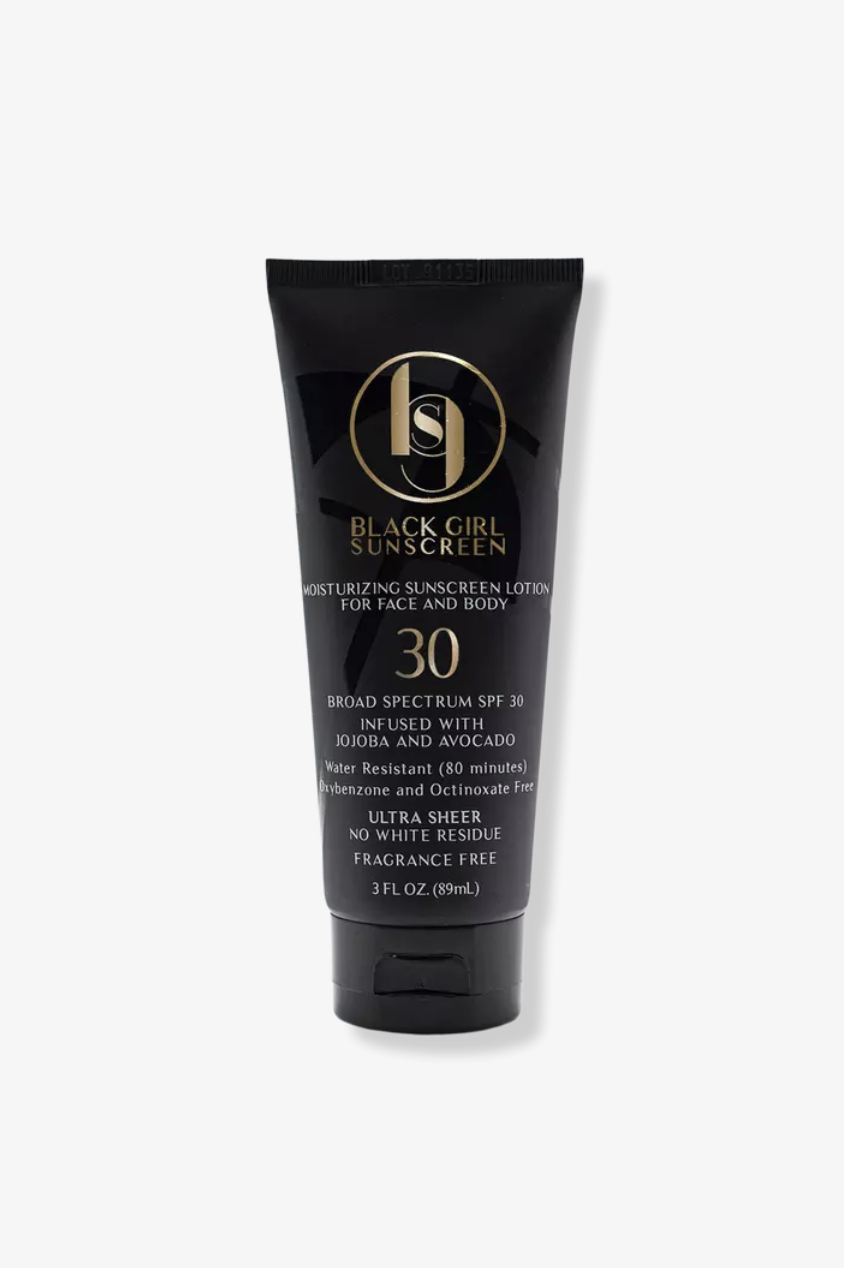
Black Girl Sunscreen Moisturizing Sunscreen Lotion SPF 30
Black Girl Sunscreen Moisturizing Sunscreen Lotion SPF 30
Pros
- Contains skin-nourishing ingredients
- Goes on clear
- No synthetic fragrances, so it’s better for sensitive skin
Cons
- Can leave skin feeling greasy
Mineral sunscreens come highly recommended by dermatologists because they act as a physical shield on the skin. Still, the downside is they tend to leave white residue behind. Not this one, though. Its clear formula is so advanced that it disappears on darker skin tones and tattoos. It's also infused with jojoba and avocado to help hydrate and nourish skin—another thing people with tattoos should be mindful of.
You can also rely on this water-resistant sunscreen for last-minute summer adventures. Just don’t forget to reapply the sunscreen after taking a dip, or after 80 minutes of swimming.
Pros
- Water-resistant for 80 minutes
- Fragrance-free formula
- Vegan and cruelty-free
Cons
- Requires some extra effort to rub in
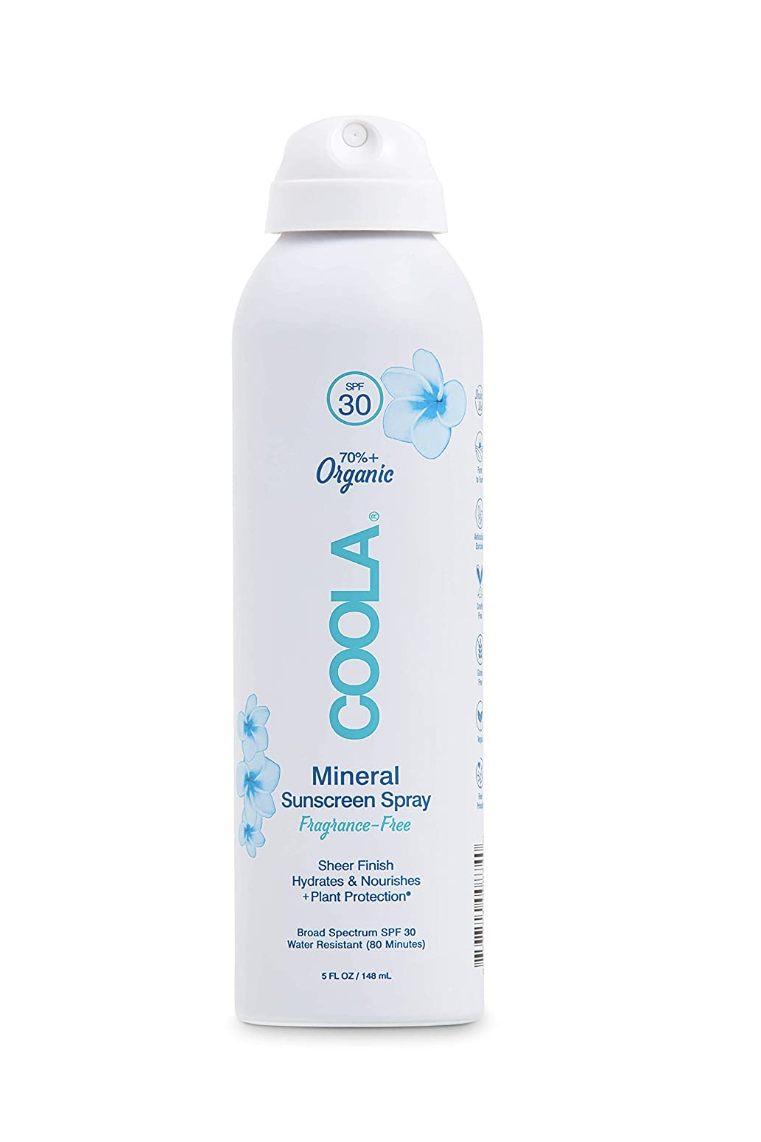
If your tattoo is located in a hard-to-reach spot like your back, you'll appreciate the convenience of a spray. Dermatologist Debra Jaliman, MD, says this spray is a good option because it contains 14.5 percent zinc oxide, as well as soothing aloe, moisturizing shea butter, and glycerin. It also contains 70 percent organic ingredients and is water-resistant for 80 minutes.
While Coola is known for their peach-scented sunscreen, this one is great because it’s fragrance-free. So if you have a sensitive nose or don’t want the smell of your SPF to compete with your body wash, body lotion, and perfume, this is the one for you.
Meet the Experts
- Alexis Granite, MD, is a board-certified dermatologist licensed in the U.S. and the U.K. She is the founder of the Women’s Health Skincare Award-winning line Joonbyrd.
- Caren Campbell, MD, is a board-certified dermatologist in San Francisco, CA.
- Chelsea Hoffman, MD, is a board-certified dermatologist practicing at Hudson Dermatology and Laser Surgery in New York City.
- Debra Jaliman, MD, is a board-certified dermatologist and assistant professor of dermatology at Mt. Sinai School of Medicine in New York City.
- Dendy Engelman, MD, FAAD, is a board-certified cosmetic dermatologist and Mohs surgeon practicing at Shafer Clinic in New York City.
- Divya Shokeen, MD, is a board-certified dermatologist and founder of OSVI Dermatology and Surgical Institute in California.
- Kseniya Kobets, MD, is a board-certified dermatologist and the director of cosmetic dermatology at Montefiore Einstein Advanced Care in New York.
- Mona Gohara, MD, is a board-certified dermatologist and associate clinical professor at Yale Department of Dermatology.
- Neera Nathan, MD, FAAD, AMCMS, is a board-certified dermatologist in New Hampshire.
FAQ
Is There a Difference Between Tattoo Sunscreen and Regular Sunscreen?
“I would much rather have someone use a ‘regular’ sunscreen they like, will apply enough of, and use consistently than a product marketed specifically for tattoos that they don’t enjoy using,” says dermatologist Chelsea Hoffman, MD, of Hudson Dermatology and Laser Surgery.
Still, if you prefer applying a sunscreen marketed for tattoos, one common difference is that tattoo sunscreens typically contain more moisturizing and nourishing ingredients, according to Dr. Engelman. Natural oils, shea butter, and cocoa butter can help improve the appearance and longevity of your tattoos, she says. These components can sometimes make the sunscreen’s texture richer and heavier, but the active ingredients and formulas are similar. So if you have dry skin, Mad Rabbit and Hustle Butter are your best options.
When Can You Put Sunscreen on a Tattoo?
Tattoo healing times vary based on size, location, and even from person to person, says Dr. Granite. They usually take anywhere from one to four weeks to fully heal, though Dr. Engelman prefers waiting at least four to six weeks. During this time, you should avoid exposing your fresh ink to the sun.
If your tattoos are in sun-exposed areas, such as your arms or legs, Dr. Hoffman suggests covering them with a bandage or clothing. It’s also worth investing in UPF 50 gear from a brand like Solbari to help block UVA and UVB rays.
Once your skin has re-epithelialized, meaning it’s fully closed and significant peeling or scabbing has resolved, then you can transition to sunscreen, says Dr. Hoffman. Otherwise, applying sunscreen prematurely can trap bacteria, increasing the risk of infection and preventing the tattoo from healing properly, says Dr. Engelman.
Do Older Tattoos Still Need Sun Protection?
Absolutely. You should still be applying a broad-spectrum SPF 30 or higher daily sunscreen. “People sometimes assume that once a tattoo is several years old, the sun can no longer affect it, but pigment breakdown from UV exposure is cumulative,” says Dr. Kobets. If you don’t wear daily sunscreen, then your ink will fade, lose saturation, and definition over years of repeated sun exposure.
Do Tattoos Protect From the Sun?
No, tattoo ink is not a substitute for sunscreen, says Dr. Kobets. Tattoo pigment can undergo UV-related changes. You’ll still want the same broad-spectrum SPF 30 or higher to cover dark or black tattoos that you would apply to the rest of your body and face.
Should You Tattoo Over Moles?
You should avoid tattooing directly over existing moles, since they can mask changes in the skin, says Dr. Granite, who is certified in both the US and the UK. If you notice new or changing skin lesions within or around a tattoo, have them checked out by your local board-certified dermatologist for peace of mind.
Nicole Saunders is the beauty editor at Women's Health and has nine years of experience researching, writing, and editing lifestyle content. She specializes in breaking down complicated topics, like red light therapy for hair growth and LED face masks, into easy-to-understand guides. Saunders takes great pride in heavily researching and testing featured beauty products, such as strengthening shampoos and body washes for dry skin on our site.
Previously, she was the beauty editor at Best Products where she tested quite literally thousands of launches for her quarterly column and the Best New Beauty Awards package. She also launched the beauty and wellness coverage at NBC News and contributed to CNN, Cosmopolitan, Billboard, The Hollywood Reporter, and Harper's BAZAAR.
You can follow her on Instagram to stay in the loop on her product testing adventures.
Christian is the Style and Reviews Director at Men's Health and Women’s Health, where he oversees shopping and style content for both brands. He started his magazine career as an accessories assistant at Vogue, and has since held editorial roles at Tatler Asia and The Manual. When he’s not online shopping, you can find him on long walks with his two corgis.


Derm-Approved Face Washes That Editors Actually Use

Hilary Duff Drops Reebok Activewear at Walmart

Shop Kerry Washington’s Exact Vuori Cover Look

The 9 Best Cooling Sheets, Tested by Editors


