9 Best Cooling Sheets for More Comfortable Sleep, Tested by Editors
We tested dozens of cooling sheets. My Sheets Rock makes the best.
 Reviewed by Christian GollayanStyle and Reviews Director

Women's Health may earn commission from the links on this page, but we only feature products we believe in. Why Trust Us?
I always thought cooling sheets were a marketing gimmick until I actually tried them while I was nine months pregnant—in the middle of July. It was the first time in months that I didn’t wake up with my sweaty hair matted against my head, and I’ve never looked back.
It’s important to get this out of the way now: Cooling sheets aren’t magic. They’re not going to keep you from sweating if you sleep under a heavy comforter or it’s warm in your bedroom at night. But they do cause a noticeable difference in how you feel between the sheets, and are one more element to help regulate your body temperature at night.
These are a few of our favorite sheet sets, but read on for more detailed reviews:
Best Cooling Sheets
- Best Overall: My Sheets Rock "The Regulator" Sheet Set
- Best Budget Buy: Mellanni Iconic Sheet Set
- Best Fitting: Bedgear Ver-Tex Sheet Set
- Best Moisture-Wicking: SlumberCloud Performance Sheet Set
- Best High-Thread Count Sheets: PeachSkinSheets Classic Collection Sheet Set
“The ideal temperature for sleeping is no cooler than 66 degrees and no warmer than 72 degrees,” says neuroscientist and sleep specialist Allison Brager, PhD. “This was study-approved, tested, and evaluated by some NASA scientists.” Resting in this temperate climate can support better sleep and, ultimately, improved health. Regularly shortchanging your sleep leads to a higher risk of obesity, depression, and type 2 diabetes, along with other health issues. But having good, consistent sleep can do the opposite.
That’s why even though cooling sheets are usually more expensive than regular sheets, they’re a worthwhile investment that will help support more restorative sleep, Brager says, and, as a result, improve your overall quality of life.
So, how can you tell which bedding option will help you hit that not-so-hot spot? Cooling sheets—especially those made from fabrics like microfiber, linen, and bamboo—can help keep your body at the right temp for restful sleep. The best cooling sheets are designed to regulate your body temperature to prevent sweating and keep you dry. But, even when you do sweat, those same sheets should actively draw moisture away from your body and evaporate it into the air, also keeping you dry and comfy all night long.
 Best Deal
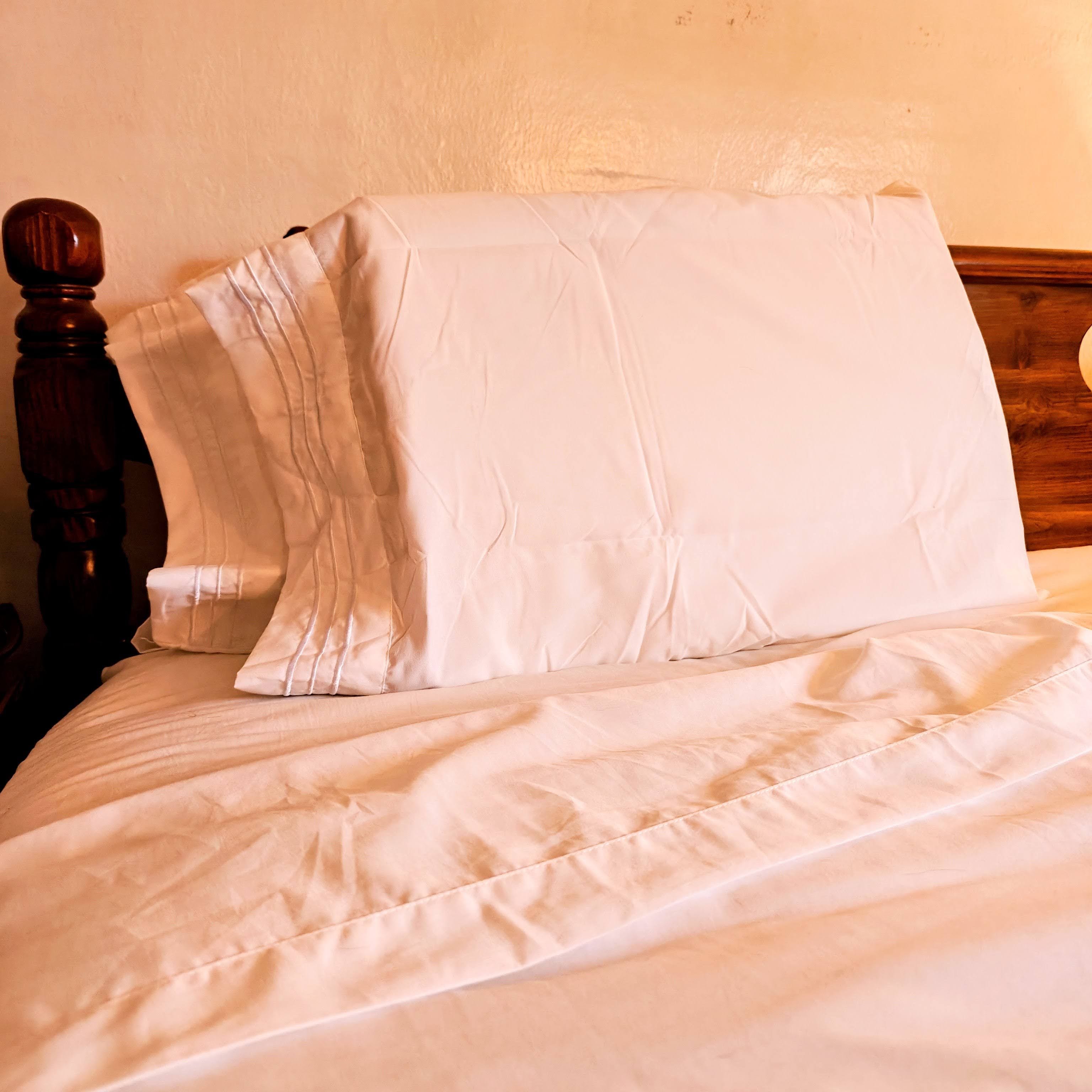

My Sheets Rock "The Regulator" Sheet Set

My Sheets Rock "The Regulator" Sheet Set
Pros
- Bamboo-rayon wicks away sweat and moisture like a champ
- Buttery soft against the skin
- Feels cooler to the touch than microfiber and synthetics
- Naturally fights odor and funk
- Available in nine solid colors

Cons
- May bunch up at the bottom of the bed

Compared to synthetic materials like polyester and microfiber, bamboo and bamboo blends are well-known for keeping humidity down and moisture low, plus they're often cool to the touch. The bamboo-rayon Regulator Sheets from My Sheets Rock do all that and more, according to two of our testers.
“They’re very soft, and I’m able to wake up not sweaty,” says Women’s Health digital designer Taryn Colbert, who has zero complaints about these sheets.
WH contributor and self-professed "hot sleeper" Lily Wohlner is also a fan. She had never owned a set of cooling sheets, but quickly fell in love with these. They're "super thin, which automatically makes them nice and light,” Wohlner says. “But they're also temperature-regulating and moisture-wicking, so you stay fresh and cool while you snooze.” She also loves how silky smooth they feel against the skin without that "crunchy" feeling found in lesser, lower-quality sheets.
There is one catch to the ultra-lightweight design, however. "Due to their weight, I find that these sheets tend to bunch up at the bottom of my bed, which I don't love," Wohlner says. "Every time I go to make my bed, I have to fish under my comforter to find them, which adds time to the already dreaded process." (Colbert hasn’t experienced this.)
It's not a deal-breaker for us, but something to be aware of. Plus, we found that the natural stretch of these sheets means making (or re-making) the bed is a snap.
Bamboo is often touted as more eco-friendly because it's possible to harvest more per acre than cotton and is typically grown without pesticides. However, the experts we spoke with warned that the raw material goes through serious chemical refinement before it's turned into bedding.
Overall, our team loved these sheets for their buttery soft, featherweight design and the ability to keep us cool and sweat-free even on the hottest summer nights. They're a great midrange set that we recommend for anyone looking to level up from the cheapest available options (like Mellanni's four-piece Iconic Sheet Set), but who isn't quite ready to splurge on an ultra-luxe set.
Read more: Best Weighted Blankets
| Material | Bamboo rayon |
| Thread Count | Unknown |
| Size Options | Twin, twin XL, full, queen, king, California king, split king |
| Pocket Depth | 16 inches |
| Return Policy | Within 90 days |
| Includes | 1 flat sheet, 1 fitted sheet, 2 pillowcases (twin sizes include one pillow case) |
Casper Hyperlite Sheet Set

Casper Hyperlite Sheet Set
Pros
- Regulates temperature and wicks away sweat extremely well
- Lightweight 100% tencel lyocell construction
- Unique grid-weave design is very breathable
- Premium look and feel belies the surprisingly affordable price tag
- Hold up well to repeated machine washings
Cons
- Limited, 30-day return policy
- Only available in one color
Casper is perhaps best known for its excellent cooling mattresses. But you might be surprised to learn the company also makes great cooling bedding. After testing over a dozen cooling sheets, Casper's Hyperlite Sheet Set earned our 'Best Runner-Up' spot for its soft, ultra-lightweight feel, the fact it looks more premium than its price should allow, and, most importantly, its 100 percent Tencel Lyocell construction. The fabric excels at fighting sweat and overheating, thanks to its structure, which absorbs and releases moisture while promoting good airflow.
“They're definitely cooling without being too ‘cold,’” says WH digital designer and tester Leeann Mattern. Fellow tester Mike Richard also praises the sheets’ lightweight, cooling feel, which he says is great year-round. But, in warmer weather, he says they do an excellent job at regulating temperature and wicking away sweat and moisture. That's thanks in large part to the tencel lyocell material and the unique, vented grid-weave pattern that Casper uses to help promote better airflow while you sleep. Bonus: Our team loved that that same grid pattern elevates the vibe of these sheets above the traditional (and often boring) flat aesthetic of most sheets with a lightly textured look and feel.
We're hard-pressed to find much to complain about with these cooling sheets, but there are a few minor concerns to keep in mind. "My only gripe is that I wish they were a little softer because they're not quite as buttery or luxurious as the true bamboo and bamboo blend options we tested," Richard says. That's largely due to their lower 200-thread-count construction (incidentally, that was the lowest of any sheets we tested this year). "I did find that they soften after a few washes, however, and hold up well to repeated machine-washings, too."
Mattern also says the lightweight fabric allows patterns in her mattress and pillow to show through, so that’s something to be aware of if you’re especially concerned about aesthetics. On that note, our team of sleep testers were a bit bummed by the lack of available color options—this sheet set only comes in white.
We would also love it if Casper expanded its return policy beyond the lackluster 30 days. That's surprisingly thin compared to the competition, and the sheets must be returned in their original, unused condition, which doesn't allow for a true "sleep trial."
Read more: Best Cooling Mattress Toppers
| Material | 100% tencel lyocell |
| Thread Count | 200 |
| Size Options | Twin, twin XL, full, queen, king, California king |
| Pocket Depth | 18 inches |
| Return Policy | 30 nights (unopened) |
| Includes | 1 flat sheet, 1 fitted sheet, 1 pillowcase (Twin and Twin XL sets) or 2 pillowcases (Full, Queen, and King sets) |
Mellanni Iconic Collection Bedding Sheets & Pillowcases


Mellanni Iconic Collection Bedding Sheets & Pillowcases
Pros
- Surprisingly affordable for the quality
- Breathable microfiber helps regulate temperature
- Durable and wrinkle-resistant
- Available in more than 40 colors and patterns
Cons
- Not as soft as more premium alternatives
- Among the thinnest we tested this year
“Jill of all trades; master of none.” That's the perfect way to describe Mellanni's Iconic Collection, including the four-piece set of cooling sheets we tested for this year's roundup. These sheets aren't the softest, the most luxurious, or the absolute best at cooling. But they are a solid all-around buy that feels better, looks better, and cools better than most other sets that cost three times as much.
"My girlfriend and I have slept on these for the last month, and we've been pleasantly surprised by how good they feel for the price," Richard says. "They feel much better and cozier against the skin than most other sheets I've tested in this price range."
Fellow tester and self-described hot sleeper Janie Booth, associate video producer at WH, also praises the feel of these sheets. “They are very soft,” she says.
The synthetic microfiber construction in this sheet set isn't purposely designed for cooling. In fact, the weave is tighter than other sheets made with natural fibers. But the material is thin enough to be surprisingly breathable, without feeling threadbare. "I actually took these glamping on a long, hot, late June weekend," Richard says. "For sticky, sweaty nights, the thickness of these sheets was perfect, and I found them much more breathable than most microfiber sheets."
On the downside, that same microfiber—polyester, really—construction means these aren't as absorbent or moisture-wicking as natural alternatives either. So, they're not as good at whisking away sweat to help further cool your body.
Like most microfiber fabrics, these sheets are surprisingly durable, though, thanks to the previously mentioned tight weave. We've found they hold up well, even after repeated washings with no loose threads, shedding, or fading. (Booth noticed some pilling, but Richard didn’t.) Plus, they're more wrinkle-resistant than most.
The biggest thing these cooling sheets have going for them is price. They're significantly cheaper (in some cases, by more than 75 percent) than every other set in this year's roundup. Plus, with Amazon's generous free shipping and free returns policy, it's almost like you're getting a legit in-home sleep trial.
One additional bonus is that these sheets are available in a much wider selection of colors and patterns than any other we tested. That's especially nice if you're keen to match the look of your new cooling sheets to the rest of your bedroom decor.
Read more: Best Cooling Mattresses
| Material | Polyester (double-brushed microfiber) |
| Thread Count | Unspecified |
| Size Options | Twin, twin XL, full, RV/short queen, queen, king, California king, split king |
| Pocket Depth | 16–21 inches |
| Return Policy | Free returns according to Amazon's return policy |
| Includes | 1 flat sheet, 1 fitted sheet, 2 envelope-style pillowcases (Twin and Twin XL sets include 1 pillowcase) |

Pros
- Feels cool to the touch
- Generous 365-day return window
- “Long” and “short” side tags make bed-making easy
- 24 color and pattern options
Cons
- May feel stiff at first
- Bold colors fade slightly with time
There are a lot of high-tech fabric blends out there designed to keep you cool, but classic cotton sheets can still work wonders. Brooklinen’s Classic Percale Core Sheet Set is a favorite in my household—so much so that I’ll try to wash them quickly when I do laundry to get them back on my mattress before I need to swap in a different set. These were the sheets I splurged on when I was heavily pregnant and hot. They still feel luxurious and crisp, even though I’ve had them in heavy rotation for two years.
The sheets are made with percale cotton, which means it’s woven into a grid pattern to give it a crisp, cool feel. It’s almost like a dress shirt, but softer, and with a noticeable coolness when you slide between the sheets.
Christian Gollayan, style and reviews director at Men's Health and Women's Health, is also a fan. “I’m a hot sleeper and usually need my bedroom below 69 degrees to avoid getting sweaty,” he says. “These kept me comfortable through fall, winter, and spring.”
Gollayan says his sheets held up “remarkably well” for nearly two years with weekly washings. When he did sweat in deep summer, Gollayan says his sheets didn’t hold onto an odor the way some other sets he’s tried have. The sheets have thoughtful details that I love, too, like envelope closures to keep your pillows from sliding out and tags that designate which end of the fitted sheet is the long and short side.
While Gollayan and I both enjoy these sheets, he noticed some fraying in his set after two years. (I haven’t had the same experience, although the rich blue color in my tandem stripes is fading.) They also felt a little stiff at first, but quickly soften up with time and repeat washings. They’re not the cheapest cooling sheets you’ll find, but they’re pretty durable and luxe.
| Material | 100% long-staple cotton |
| Thread Count | 270 |
| Size Options | Twin, twin XL, full, queen, king, California king |
| Pocket Depth | 16 inches |
| Return Policy | 365 days ($10 return fee) |
| Includes | 1 flat sheet, 1 fitted sheet, 2 pillowcases |
Bedgear Ver-Tex Sheet Set

Bedgear Ver-Tex Sheet Set
Pros
- Unique Powerband makes for a super snug sheet and pillowcase fit
- Buttery soft and cool to the touch
- Very durable, even after repeated machine washings
- Luxurious look and feel
Cons
- More expensive than other options on this list
- Limited size and color selection
Of course, you don't have to spend hundreds to score a decent set of cooling sheets. But, sometimes, you really do get what you pay for. That's true of Bedgear's Ver-Tex Sheet Set. They're pricier than most we tested this year, but oh so worth it with a performance-minded design that keeps you cool and stays put, even during your most "vigorous" bed activities.
The Ver-Tex Sheet Set is the only one in this year's roundup made of 100 percent nylon. Like many synthetic materials, nylon isn't typically absorbent or very good at wicking away moisture. "I initially planned to test these out in my guest room," Richard says. "But my girlfriend and I loved how cool-to-the-touch they were, and found them way softer and airier than we expected, so we wound up putting them on our bed."
The nylon is extremely breathable, allowing them to cool better than most. In very humid environments (think Miami in August), however, we did notice that they felt slightly clammier than other natural fabric sets our team tested. “This is such a ridiculous thing to say, but they almost did their job too well,” says fellow tester and WH social media editor Alyssa Cruz. “I sometimes wake up cold and need to add extra blankets.” Because of this, she plans to switch them out during the chillier winter months.
Still, our team agrees that these sheets are worth the $300 price tag. “I love the feeling the most,” Cruz says. “These are the softest sheets I have ever felt, and almost feel like activewear. They make falling asleep feel luxurious.”
Plus, one of this set's biggest selling points is its ability to stretch and provide an extremely good fit, thanks to Bedgear's unique Powerband. It's a thick, full-band elastic designed to grip the bottom of your mattress so it won't slip. The pillowcases included with the Ver-Tex sets also feature this same band, so we never wound up with our pillows inching their way out of the case. Everything stays put, so you're not left remaking the bed every night before tucking in.
There's almost nothing we dislike about these best-in-class cooling sheets. But we do wish they were available in more than four colors. They're also not sold in smaller sizes like Twin, Twin XL, or Full, which may or may not be a deal-breaker for you.
Lastly, these are among the priciest cooling sheets we tested over the past year, and the most expensive in this roundup. Still, we think you get what you pay for with this set. They're extremely durable, cool better than almost every other set we tested, and the ultra-snug fit for both the sheets and pillowcases is second to none.
| Material | Nylon |
| Thread Count | Unspecified |
| Size Options | Twin/twin XL, full, queen, king/California king, split king/split California king |
| Pocket Depth | 17 inches |
| Return Policy | 100 days (unopened) |
| Includes | 1 flat sheet, 1 fitted sheet, 2 pillowcases |
SlumberCloud Performance Sheet Set

SlumberCloud Performance Sheet Set
Pros
- High-tech Outlast material provides amazing moisture-wicking
- Long-staple fibers are soft and durable
- Full elastic bands at the corners keep the fitted sheet in place
- Free returns via a no-questions-asked, 60-night sleep trial
Cons
- Lower-than-average thread count
- “NASA Cooling Technology” claims may be overblown
Most cooling bedding products are designed to draw away and evaporate moisture. But that means they only start working after you're already sweating and are probably miserable. Slumber Cloud's Performance Sheets take a different tack with a uniquely blended construction that actively regulates temperature the entire time you're sleeping to (ideally) keep you cool and comfortable before sweat ever becomes an issue.
The secret sauce to Slumber Cloud's Performance Sheets is a blend of reactive Tencel with Outlast viscose. Tencel is already one of our favorite fibers for cooling sheets, but the addition of Outlast levels up the entire setup. "I've used Outlast-infused hiking apparel before, and it's incredibly effective at regulating body temperature in hot or cold environments," Richard says. "The addition of Outlast in these sheets delivers best-in-class moisture-wicking, which is a game-changer if you're a hot (and potentially clammy) sleeper." The 300-thread-count material might appear to be lower quality than higher-end 500-plus-thread-count alternatives. But, these feel every bit softer than many premium sheets we've previously tested.
These sheets are soft to the touch, according to fellow tester and WH entertainment editor Amy Wilkinson. “But my absolute favorite thing about these sheets, which I've never encountered with another set, is the additional elastic band at the corners of the fitted sheet that help it wrap around virtually any size mattress you can imagine,” she says. Compared to the traditional "corner-sewn" elastics found in most traditional fitted sheets, the bands in this sheet set help keep it firmly in place.
One especially nice feature of all of Slumber Cloud's bedding, including its performance cooling sheets, is the 60-night in-home sleep trial. Unlike most of the competition, Slumber Cloud provides full refunds within a 60-night period for any reason, even on opened sheets.
If you’re an extra-hot sleeper, however, you may want to look elsewhere. While Wilkinson found these sheets cooling, she says that, despite claims about being designed with “NASA cooling technology,” they didn’t seem to cool her off better than her previous sheets set. Still, they are great at wicking moisture and are incredibly durable.
(Pro tip: The Performance Sheet Set is, in our opinion, Slumber Cloud's best cooling sheet set. But, if you're looking for almost-as-good performance with a classic sheet feel, opt for its Essential Sheet Set which blends cotton with Outlast fibers.)
| Material | 40% outlast viscose / 60% tencel lyocell |
| Thread Count | 300 |
| Sizing Options | Twin, twin XL, full, queen, king, California king |
| Pocket Depth | 12–15 inches |
| Return Policy | 60 night in-home sleep trial |
| Includes | 1 fitted sheet, 1 flat sheet, 2 pillowcases (Twin and Twin XL sets include 1 pillowcase) |
PeachSkinSheets Classic Collection Sheet Set

PeachSkinSheets Classic Collection Sheet Set
Pros
- 1,500-thread-count is luxuriously soft
- Great for sensitive skin
- Extra deep design fits up to 22-inch mattresses
- Wrinkle, stain, and pill-resistant
- Available in over 30 colorways
Cons
- High thread count means they don't cool quite as well as the competition
- Top sheet isn’t long enough for some
It can be tough to find high-thread-count sheets that also cool effectively. Somehow PeachSkinSheets manages to thread that needle (pun intended) with its Classic Collection. With an airy, breathable, smart poly-fiber construction, these sheets are surprisingly effective at keeping you cool, calm, and collected.
"I tested these in our guest suite, and the in-laws (self-described 'fussy' sleepers) and I both agreed that these do an incredible job at keeping you cool during the night," Richard says. "The 1,500-thread-count is noticeable, making them feel more premium, more luxurious than the price tag would suggest." But more importantly, our entire test staff found these kept us cool while also doing a reasonable job of managing sweat and moisture. The athletic-grade construction is lighter than traditional cotton, and they breathe more like high-end (think Lululemon) athleisure apparel.
The clean, OEKO-TEX Standard 100-certified construction ensures that these sheets are safe for users with sensitive skin (OEKO-TEX Standard 100-certified means the product has been tested and is clean of potentially harmful substances, like formaldehyde or nickel). "My girlfriend has extremely sensitive skin, and even basic synthetics like polyester don't always agree with her, sometimes causing rashes and irritation," Richard says. "We were initially skeptical about these poly-fiber sheets, but she's had zero issues and finds them extremely comfortable."
The feel of these sheets was also a perk for WH associate style and reviews editor Shannen Zitz. “The sheets are super soft and smooth without causing me to overheat at night,” she says.
Zitz praises the deep corners of the fitted sheet, too. “I love that the fitted sheet actually stays on my bed,” she says. “My biggest issue with sheets is when they slip off the corners after just a few nights, but these have really deep corners so they stay put really well.” Every set also includes an extender panel, allowing the sheets to fit extra-deep (up to 22-inch) mattresses which covers just about every model on the market.
Unlike most of the competition, they're available in more than 30 colorways—everything from basic white and navy to bolder options like gold and neon orange—making it easy to match the aesthetic of your current bedroom setup.
After several months of testing, we found the Classic Collection cooling sheets to be extremely durable. "Even after repeated machine-washing and with two cats in my house, these sheets have stood up to teeth, claws, pills, pulls, and fading," Richard says. "Plus, fresh out of the wash, the wrinkles release almost instantly after making the bed, so I never have to worry about ironing them." The only gripe, per Zitz, is that the top sheet felt a little short. “I toss and turn a lot and, after a night or two, I find the bottom of the sheet comes untucked pretty easily,” she says. “If you like your sheets to feel really snug, it requires re-tucking.”
PeachSkinSheets also shines with a solid, 30-day return policy. Like SlumberCloud, it's more like an in-home sleep trial. Even opened bedding can be returned within 30 days for a full refund, so it's truly risk-free to try them out at home.
| Material | Poly-fiber |
| Thread Count | 1,500 |
| Size Options | Twin, twin XL, full, full XL, queen, king, California king, split king, split head |
| Pocket Depth | 22 inches |
| Return Policy | 30-day, money-back guarantee |
| Includes | 1 flat sheet, 1 fitted sheet, 2 pillowcases (twin and twin XL sizes include 1 pillowcase) |
Sijo AiryWeight Eucalyptus Sheet Set

Sijo AiryWeight Eucalyptus Sheet Set
Pros
- Won’t pill with washing and wear
- Made from sustainably sourced FSC and PEFC-certified eucalyptus wood
- Option to purchase set with or without flat sheet
- 13 color and pattern options
- OEKO-TEX and Asthma and Allergy Friendly certified
Cons
- Can only be returned within 60 days if unopened
If you love the silky smoothness of cotton sateen sheets, Sijo’s AiryWeight Eucalyptus Sheets offer a similar feel while being 70 percent more moisture-absorbing. Made with naturally hypoallergenic Tencel Lyocell, the glossy silk-like texture of the sheets are a great option for those with sensitive skin, especially if certain materials make you feel itchy. Plus, the set boasts OEKO-TEX and Asthma and Allergy Friendly certifications.
“The feel of these are incredible,” says WH fitness editor Cori Ritchey. “With cooling sheets, I tend to fear they're going to be too slick and not cozy. These are kind of the perfect blend.” The sheets feel silky but not slippery, she adds.
At $185 for a queen-size set, these Sijo sheets aren’t cheap, but they are long lasting. The brand claims the sheets survived 2,000 rubs without pilling in lab testing. They passed Ritchey’s personal durability test, too: “They wash very nicely—they don't seem to lose their texture the longer you use them,” she says. And for those of us whose top sheet ends up on the floor most nights, you can subtract the flat sheet from the set for a $75 discount.
One of the downsides of the sheets is the two-month return window that only applies if the bedding is unopened—but there is a catch here. If you spend more than $100 (which you would if you got the fitted and top sheet), you can enjoy a 30-day sleep trial. If you spend less than $100, you have to return these within 60 days unopened. Some customers have also noted that the sheets shrink a little after the first wash (we didn’t notice this during testing, but it’s worth flagging).
Some hot sleepers merely need sheets that are breathable throughout the night, while others prefer bedding that is immediately cool to the touch. If you want a set of sheets that feels like sleeping on the cool side of the pillow all night long, Sijo’s AiryWeight Eucalyptus Sheets are for you. “I'm normally a hot sleeper and these have kept me cool and comfortable,” Ritchey says.
| Material | Tencel lyocell |
| Thread Count | Unspecified |
| Size Options | Twin, twin XL, full, queen, king, California king |
| Pocket Depth | 16 inches |
| Return Policy | 60 days (unopened) |
| Inclues | 1 fitted sheet, 1 optional flat/top sheet, and 2 pillowcases |

Pros
- Generous 365-day return window
- OEKO-TEX certified and European Flax certified
- Gets softer with each wash
- Breathable yet durable and weighty
- 13 color and pattern options
Cons
- No twin size options
- Almost $400 for a queen size set
- Wrinkles easily
Linen sheets are a great option for hot sleepers, if you’re willing to spend a little more. Brooklinen’s Linen Core Sheets are made with 100% European flax that softens with each wash, although they may be a little rough for sensitive skin right out of the box. The sheets are breathable yet they have a weight to them, which makes them great for year-round use.
“These sheets are so soft and cozy—truly the most comfortable material I have ever slept on,” says WH associate editor Olivia Luppino. “I actively look forward to getting into bed with them.” She describes the sheets as plush to the touch, while still maintaining a sleekness that gives them a cooling feel. “They definitely keep me cool in warm summer months,” she says. “I’m very into these sheets.”
That said, one of the (few) downsides is the $300-plus price tag, which is expensive but not outrageous when it comes to linen sheets. Plus, Brooklinen tends to run frequent sales, so it’s not unusual to see a 25 percent discount. The sheets have gotten softer with each wash, but at the same time they wear like iron with no snagging, pulling, or pilling to be found.
They are also OEKO-TEX certified and come with the longest return window of our favorite cooling sheets at a whopping 365 days. If you’re looking to make an investment that will last and keep you cool in any climate, Brooklinen’s Linen Core Sheets are worth the splurge.
| Material | European flax |
| Thread Count | Unspecified |
| Size Options | Full, queen, king, California king |
| Pocket Depth | 15 inches |
| Return Policy | 365 days ($10 return fee unless you visit a retail location) |
| Includes | 1 flat sheet, 1 fitted sheet, and 2 pillowcases |
How We Tested
To curate a list of the best cooling sheets, we recruited eight Women's Health staffers to personally vet a wide range of sets in various temperatures and environments over the past year. For instance, we slept in Casper's Hyperlite Sheet Set in July with no air-conditioning, glamped with Mellanni's Iconic Collection in New Hampshire, and cozied up in SlumberCloud's Performance Sheet Set with the window open in 80-degree heat “for science.” Then, our testing editors narrowed the selections by evaluating each sheet set based on style, fit, price point, comfort, breathability, moisture management, softness, fit, durability after washing, wrinkling or pilling, and value.
What to Consider
What is the Coolest Material for Bed Sheets?
It probably goes without saying that sheet material matters above all else. Natural fibers, like linen, bamboo, and cotton, are often best, according to Brager. They tend to be more breathable and absorbent (more on why that's actually a good thing below) than others, which means they won't trap heat that can make you sweat as you catch your zzz's.
What Type of Weave is Best for Hot Sleepers?
Your sheets’ weave is the pattern used to hold the threads together to make the fabric. Percale is generally considered the best weave for hot sleepers. This type of weave uses a simple pattern that maximizes airflow and has a lightweight feel, lowering the odds it will trap body heat while you snooze.
It’s generally recommended that you avoid sateen or flannel sheets if you’re looking for a cooling feel. These tend to be denser and hold onto heat as a result.
Do Moisture-Wicking Sheets Actually Keep You Cool?
There are so many factors that go into how cool you feel when you slip between the sheets at night, including the temperature of your room, your body temperature, the weight of your comforter, and your mattress composition. But we sweat a lot throughout the night. "If you don't have something that's absorbent, you will marinate in sweat," Young says. That's why natural materials that are highly absorbent, like linen and cotton, are important. "Even more important than that is wicking, which means getting moisture to the surface for evaporation," says Young. The two of these features working in tandem is what keeps you both dry and cool.
Moisture-wicking sheets can be one element to help keep you cool at night. These sheets are specially designed to pull moisture away from your skin and evaporate, allowing you to feel cooler, faster. They also tend to feel a little airier than other sheets.
That doesn’t mean you won’t ever feel hot if you use moisture-wicking sheets—again, there’s a lot happening when you sleep that can influence your body’s temperature. But you can usually feel a difference between how you feel when using moisture-wicking sheets and other types of sheets.
What Should the Thread Count of Your Sheets Be?
Beyond the material of your cooling sheets, the quality of that material is important. Back in the day, thread count was the single most important measure of quality in bedding. Anything above 600 thread count was often considered good, while 800 and above was downright luxurious. But advances in technology have allowed us to create sheets with a 1,500, even 2,000, thread count. That’s not necessarily a good thing, as that figure can be inflated and used as a marketing gimmick.
Plus, super-high thread-count sheets usually aren’t all they're cracked up to be. “My experience with those is that they’re not strong, and they don’t hold up well,” says Deborah Young, owner of TheTextileExpert.com and a clinical assistant professor of textiles at Arizona State University. “They are seductively soft, but for me, there’s a point of diminishing returns.”
Thread count can be a measure of quality, but you'll want to consider other factors, too, especially when shopping for the best cooling sheets. Some manufacturers rely on GSM (or grams per square meter) as this is a measure of weight rather than thread density.
Young's most important tip for hot sleepers, however, is that they may actually benefit from sheets with a lower thread count (like 400). A higher thread count often means the sheets are denser, offering better coverage, but a hot sleeper would probably want to avoid this.
Can You Return Cooling Sheets After Sleeping on Them?
It depends. Every brand we recommend below offers a return policy with a minimum 30-day term. Some, however, only accept returns for unopened sheet sets in the original packaging. Others provide longer terms (up to 365 days) with no questions asked, effectively like a free in-home trial.
What Certifications Should My Cooling Sheets Have?
There are a variety of certifications out there to ensure that consumers are getting high-quality bedding and textiles. One of the most common labels you’ll find on sheets is the OEKO-TEX Standard 100 certification, which means that the product has been tested for more than 1,000 harmful substances. Some sheets may also have sustainability labels, like FSC certification, or an Asthma & Allergy Friendly certification from the Asthma and Allergy Foundation of America. Keep in mind that more certifications tend to lead to a higher price tag, though—and not all are necessary.
How Much Should I Spend on Cooling Sheets?
Our favorite cooling sheets range in price from $37 to $322 for a queen-size set. There’s no need to spend hundreds on a set of sheets—you can easily find high-quality cooling sheets for $100-plus. However, certain fabrics like linen will cost more and in return should survive many years of use.
Why Trust Us?
Women’s Health first wrote this story in 2019, and has been continuously testing new cooling sheets as they’re released. During that time, some clear favorites have emerged. For this update, we had several WH staffers and contributors test these products in their own beds. Each sheet set was tested for two to three weeks or longer, and evaluated on their cooling abilities, softness, and durability, among other factors. Testers ranged from those who regularly wake up sweaty to people who consider themselves “neutral” in terms of sleep temperature.
Frequently Asked Questions
Do cooling sheets actually work?
Yes, cooling sheets actually work. They’re designed to be lightweight, breathable, and moisture-wicking, all of which can make you feel cooler when you sleep at night. However, there are a lot of factors that influence how hot you feel at night, including the type of mattress and comforter you have. Ultimately, cooling sheets are one more way to help you feel comfortable, but they shouldn’t be the only thing you use if you tend to run hot while you sleep.
What sheet material is best for hot sleepers?
Cotton is usually considered best, but you have a few options to choose from when it comes to cooling materials for sheets.
- Cotton: Classic cotton, especially percale cotton, is naturally breathable and moisture-wicking. It's also typically more affordable than high-tech synthetics, and many people love the traditional soft feel.
- Bamboo: Bamboo fibers are naturally moisture-wicking, leading to a cooling feel. These sheets also tend to be highly breathable, making them a good choice for hot sleepers.
- Linen: Like cotton and bamboo, linen is naturally breathable with a structure that feels light and airy. It's also highly absorbent—great for pulling sweat and moisture away from your skin. On the downside, it tends to wrinkle very easily.
- Tencel Lyocell: This rayon-sourced fabric is actually made from wood pulp. It's silky smooth and excellent at wicking away moisture.
- Microfiber: This synthetic fiber is extremely soft and excellent at wicking away moisture. However, low-quality microfibers can trap heat.
Are bamboo sheets cooler than cotton sheets?
Bamboo sheets can be cooler than cotton sheets, but that’s not always the case. The weave of your sheets matters. A cotton percale weave sheet can be very cooling and even more cooling than standard bamboo sheets. But cotton is also used to make flannel sheets—which are heat-insulating, not cooling—making it hard to rely on fabric alone when choosing the best cooling sheets.
Does thread count affect how cool sheets feel?
Thread count is usually linked to the softness of sheets, but it can impact how cool sheets feel. A higher thread count typically means that sheets are denser, which can work against your efforts to stay cool. That’s why Young suggests choosing sheets with a lower thread count, like 400, over much higher thread count options.
How often should you wash cooling sheets?
Cooling sheets should be washed as often as “regular” sheets, which means they should be washed every week, says Kelly Murray, a certified pediatric and adult sleep coach in Chicago. This will allow you to wash away any allergens, keeping your sheets feeling crisp and fresh, she adds.
By the way, you should wash your cooling sheets before using them, too. "You're washing off any dust the sheets may have collected in the warehouse, which can irritate your respiratory system and lead to sleep issues,” Murray says.
Some cooling sheets, especially those made with natural fibers like cotton and linen, soften with each successive wash. If your new set feels a little too stiff or "crunchy," try running them through a machine wash cycle or two to soften them.
How often should you change your sheets?
There is an almost universal rule among experts that you should be changing your sheets every week, and Murray concurs. If you don't want to wash your sheets that often, you should consider purchasing an extra set to swap out each week.
As for when it's time to swap out cooling sheets for brand new ones, that's up to you. Murray says she purchases a new set whenever she sees them on sale, but recommends replacing yours about every two to three years.
What are some other “cool” sleeping tips?
ICYDK, your body temperature needs to drop about 2 degrees lower at night in order to synthesize melatonin, Murray says. So, it is super important that you create an environment that allows for this. That means ensuring your bedroom is "dark, cool, and quiet" when you're ready for bed.
Other than investing in some cooling sheets, you can also improve your sleep quality by keeping a consistent sleep routine that involves ending screen time at least an hour before you go to bed. "Your body and brain are always looking for patterns throughout the day to know what happens next," Murray says. "So if you have a consistent bedtime routine that's very relaxing, that will trigger the production of melatonin and help your brain to unwind."
Meet the Experts
- Allison Brager, PhD, is a neuroscientist and sleep specialist.
- Deborah Young is the owner of TheTextileExpert.com and a clinical assistant professor of textiles at Arizona State University.
- Kelly Murray is a certified pediatric and adult sleep coach based in Chicago.
More of Our Favorite Sleep Products
Best Mattresses | Best Cooling Comforters | Best Cooling Mattress Toppers | Best Cooling Pillows | Best Memory Foam Mattress | Most Comfortable Mattresses | Best Comforters | Best Sound Machines | Best Pillows for Back Sleepers | Best Pillows for Neck Pain | Best Pregnancy Pillows | The Softest Sheets | Best Cooling Mattresses | Best Pillows | Best Weighted Sleep Masks
Korin Miller is a seasoned freelance writer specializing in general wellness, sexual health and relationships, and lifestyle trends, with work appearing in Men’s Health, Women’s Health, Everyday Health, Food & Wine, and more. She has a master’s degree from American University and lives by the beach.
Christian is the Style and Reviews Director at Men's Health and Women’s Health, where he oversees shopping and style content for both brands. He started his magazine career as an accessories assistant at Vogue, and has since held editorial roles at Tatler Asia and The Manual. When he’s not online shopping, you can find him on long walks with his two corgis.


8 Best Pillows of 2026, Tested by Editors

How to Stay Cool While Sleeping

Hot Sleepers Need These 8 Ultra-Cooling Comforters

A Contactless Sleep Tracker Has Arrived From Hatch


