The 11 Best Red Light Therapy Tools of 2026, Tested By Beauty Experts
Our top picks—from Omnilux, Theraface, and Qure—treat acne, boost collagen, and more.
 Reviewed by Brian UnderwoodBeauty Director

Women's Health may earn commission from the links on this page, but we only feature products we believe in. Why Trust Us?
If you're starting to notice that your skin is looking a little, well, tired, you're not alone. The visible signs of aging—I’m talking fine lines and wrinkles, dullness, even sallow skin—will strike us all sooner or later. Bummer. On the bright side, we're living in an age when there's no shortage of smart beauty devices and skincare products for these issues. From wrinkle-smoothing injections like Botox and fillers to anti-aging creams, you've got an arsenal of skin-boosting tools at your disposal.
But what if I were to tell you that there's one such solution that takes roughly ten minutes a day and can be done while you're relaxing in bed scrolling TikTok? Enter red light therapy.
Best Red Light Therapy Tools
- Best Overall: CurrentBody Skin LED Face Mask: Series 2
- Best Value: Skin Gym Wrinklit LED Mask
- Best For Mature Skin: Qure Light Therapy Mask
- Most Amazon Reviews: Pure Daily Care Luma Mask LED
- The Women’s Health Beauty Award Winner: Solawave Neck & Chest Pro Light Therapy Mask
Red light therapy has exploded in popularity lately because it's convenient, non-invasive, and can be done at home. It uses a specific spectrum of visible light that offers a host of beauty benefits—low-level laser light therapy can effectively treat scars, vitiligo, and psoriasis, research shows. It has an anti-inflammatory effect and can even help to smooth wrinkles, too. So, how does it work? We know that red light penetrates 2 to 3 millimeters into skin's dermis, where it's “absorbed by light-sensitive porphyrins in the mitochondria of skin cells, stimulating energy production in fibroblasts to churn out more collagen,” says dermatologist Ava Shamban, MD.
But the goodness doesn't stop there. Red light can also help fade dark spots and manage eczema, plus boost hair growth, says dermatologist Purvisha Patel, MD. These at-home devices can be expensive, but they're an investment you can use for a lifetime: Many red light therapy tools are also equipped with blue lights, which is particularly effective at treating acne (say buh-bye to those period or menopausal breakouts) and other concerns. Bottom line: At any age—and for years to come—these red light therapy tools can be a beneficial addition to your beauty routine.
What to Consider
I've got a great list of options for you, but if you find yourself in the market for one of the best red light therapy tools, here are a few things to keep in mind.
Type
There are several kinds of red light therapy devices to choose from, including panels, masks, and facial wands, and one may be a better fit for you based on your lifestyle and the area you're seeking to treat.
Masks
LED masks are the most common variety you'll find for home use because most are hands-free and contain a lot of diodes (a fancy way of referring to the individual lightbulbs), offering a powerful burst of light to treat the face, neck, or chest.
Panels
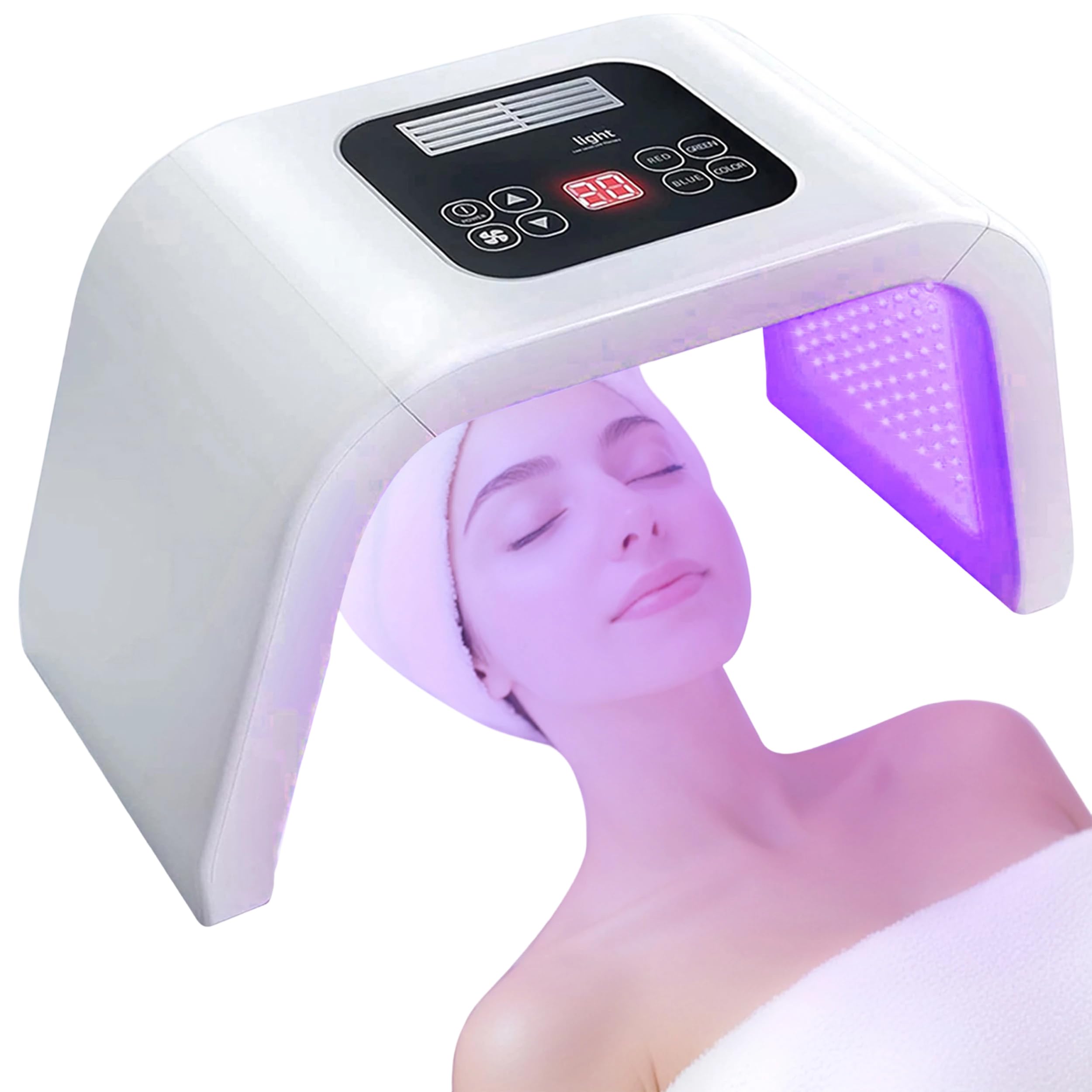
Maybe you're claustrophobic and the idea of wearing masks gives you the heebie jeebies—that's where panels come in. They look like flexible bodyboards that you lie down under, and they come in a diverse range of shapes and sizes, each offering different levels of red light exposure to your face, décolletage, and back. These also help replace the need for a separate lip-specific red light therapy tool.
Facial Wands
Wands are appealing when you want to target smaller specific areas (the crow's feet or smile lines, for example) and prefer to do your treatments on the go (you can walk around while using these).
Undereye Patches, Eye Masks, and Goggles
Our eyes are the first place to show signs of aging, so you’ll want to take a cue from dermatologist Pooja Rambhia, MD, and use these affordable red light therapy eye tools. They target fine lines, wrinkles, darkness, and puffiness early on, making them a smart preventative beauty move.
Time Commitment
It's tempting to pick a device with the quickest treatment window, especially if you don't have loads of free time to sit back and chill with a red light mask. But remember: To treat more advanced signs of aging, a longer treatment time may be more beneficial. Look at the full picture before you base your purchase on the convenience of a quicker treatment. And for what it’s worth, almost all of our featured recommendations can be used in just three minutes, so even busy women can incorporate quick treatments into their routine.
Nanometers
You may notice the abbreviation "nm" on the outer packaging of many of these tools. This stands for nanometers, and refers to the wavelength of the light that the device emits—an important metric to consider, says dermatologist Jody A. Levine, MD. "Red light typically falls between 630 and 660 nanometers, and is good for targeting fine lines and mild discoloration," says Dr. Levine. If you're looking for something slightly more powerful—to deal with deeper wrinkles, sagging, or stubborn pigmentary problems—go with a device that cranks up to the near-infrared range (between 800 and 850 nanometers) to penetrate deeper.
How We Selected
Our beauty team is well-versed in red light therapy tools. We’ve been updating this story since December 2022—and I’ve been writing about these devices since November 2019. I've also been using red light therapy tools since April 2018. They've significantly diminished my stubborn fine lines and hyperpigmentation—and when I stop for a few months, they slowly reappear. Consistency is key, so we tested dozens of red light therapy devices for over two years to determine which ones are worth purchasing and can help us maintain wrinkle-free skin.
Since there are quite literally thousands of options available on Amazon alone, I asked dermatologists about their no-fail picks. Next, I recruited WH staffers—beauty director Brian Underwood, associate style & commerce editor Shannen Zitz, and associate health and fitness editor Addison Aloian—and our beauty contributors—Erica Metzger, Lily Wohlner, and Lisa DeSantis—for their suggestions. After compiling a comprehensive list of promising new launches, old standbys, and products that align with derm guidance, we got to testing.
We spent at minimum three weeks evaluating attributes like ease of use, treatment time, comfort, any tangible results, and overall value. Of the 22 devices tested, these ten delivered the best results in our in-depth testing process.
Beyond keeping expert guidance in mind—type, nanometers, and time commitment—we considered our long- and short-term results. We also considered each product’s durability over the years, and eliminated anything that doesn’t remain in top shape. Ahem, don’t forget to clean your LED face masks to help with their longevity. We also tried the latest drops and the Women’s Health Beauty Award-winning Solawave Neck & Chest Pro Light Therapy Mask took the crown as our favorite launch of the year.
Ultimately, these are the devices that we’ll continue to use and would genuinely repurchase if we had to start our skincare routine from scratch. The best part? Our faves start at just $72, which is a major win for a category that easily ranges from $300 to $700.
 Best Deal


Pros
- WH Skincare Award Winner
- 3 types of LED wavelengths
- Quick 10-minute treatments
- Includes a chin strap for max coverage
- Flexible design that molds to different face shapes

Cons
- It’s a bit odd-looking

CurrentBody Skin has quickly become my go-to brand for smart beauty devices. I’ve recently featured the line in our guide to the best red light therapy eye masks. However, the Series 2 Mask is the crown jewel of CurrentBody Skin’s roster. I love mine so much that I crowned it the best LED device in our annual Skincare Award package. So why did it deserve a permanent spot in my routine? Simply put: It’s a fast-acting device that requires a minimal commitment and provides the most anti-aging coverage among all of the featured picks.
Unlike a single-wavelength treatment, CurrentBody Series 2 combines red, near-infrared, and deep near-infrared lights to target multiple concerns in one session. Hyperpigmentation from zits? Faded. Fine lines and wrinkles? Girl, bye. My smile and eleven lines are less obvious after the first month, and hormonal breakouts flatten within two days rather than a week.
Series 2 is covered in 236 LED bulbs for a stronger, more even treatment. It also includes a brand new chin strap which provides the most coverage among the featured masks. This design also prevents a dreaded line of demarcation that shows aging skin along the chin and a more taut, youthful face.
I’m also a big fan of the flexible silicone material, which accommodates everyone’s beautiful features and face shapes—a major win for anyone who doesn’t enjoy the rigid feel or doesn't fit the Euro-centric design of hardshell LED face masks.
I also love the low commitment schedule. Some red light therapy devices require up to 30 minute daily treatments and I don’t have the bandwidth to stick to those guidelines. But CurrentBody Skin requires only three 10-minute treatments each week. Admittedly, even when I squeeze in just one session a week, I still notice an immediate glow that looks even better the next day. And since this mask comes with protective eye inserts, I’m able to watch TV, read, or scroll through social media so the sessions breeze by. Lately, I’ll turn on a calming playlist and sit with my eyes closed to attempt to be more mindful and present.

Features at a Glance
| Device Type | Face mask |
| Different Lights | Red, near-infrared, and deep near-infrared |
| Nanometers | 633nm (red), 830nm (near-infrared), 1072nm (deep near-infrared) |
| Treatment Time | 10 min |
Skin Gym Wrinklit LED Mask

Skin Gym Wrinklit LED Mask
Pros
- Three light colors address different skin concerns
- Results comparable to more expensive options on this list
- Affordable price
Cons
- The lights aren’t as bright
TBH, finding a red light LED face mask that’s under $300 is rare, let alone a reputable model that’s under $100. Despite the low price, dermatologist Brendan Camp, MD, endorses this mask as an impressive, budget-friendly option. Both Dr. Camp and Underwood appreciate the various light modes—red, blue, and amber—target wrinkles, acne, and inflammation. Underwood considers it an especially great option for women with mature skin concerned with wrinkles and younger users battling breakouts.
Its pretty pink design is cute, but the lightweight feel—especially compared to the Qure—and wireless design are equally impressive. You can glow up while completing chores or watching an episode of Curb Your Enthusiasm which is super practical since treatments last up to 30 minutes.
Despite the affordable price tag, it's a lighter option than Qure's mask (one versus two lbs ) and features built-in eye protection (rimmed glasses built into the mask) so you don't have to struggle to get the eye protection to fit.
On the downside, the lights sit slightly further away from the face and don't appear as bright as others we tried even though the nanometers listed in the manual are comparable. That said, you’re only paying $99 for this mask, which is only a third of other alternatives on this list, so the trade off isn’t that bad.
| Device Type | Mask |
| Different Lights | Blue, red, orange |
| Nanometers | Red (630nm), blue (470nm), orange (590nm) |
| Treatment Time | 15-30 min. |
Qure Light Therapy Mask


Qure Light Therapy Mask
Pros
- Connects to a compatible app for customized and entirely hands-free experience
- Quick three-minute treatments
- Five different types of lights
- Five different types of lights
Cons
- Five different types of lights
If you're on the hunt for a red light therapy tool that checks all of the boxes (who isn't?!), Qure's Light Therapy Mask is a solid answer—and one that will help you reap a lifetime of benefits. In addition to two types of red light—red and deep red—for anti-aging benefits, the mask also boasts infrared, amber, and blue lights to deal with acne, fine lines, and sun spots.
Using the device is simple: Hold down the power button for three seconds until the light turns on, adjust the straps, and press the button once for the anti-aging mode or press it twice for the acne treatment. You can also use the smartphone app to customize a plan just for you. The icing on the cake? Treatment time is only three minutes for all plans—among the fastest of all the devices we tested.
Qure's various LED lights are within the correct wavelength range to treat multiple skin concerns. For example, acne-fighting blue light should be between 400 and 500nm (Qure's is 415nm), while near infrared is most helpful between 760 and 1,400nm.
In our evaluations, Earley loved the structure of the mask, which sits squarely on her face so it doesn’t need to be constantly readjusted (an annoying feature of some of the others we tried). "This mask is lightweight, and fit my face perfectly, making me feel like I was reaping the most benefits," says Earley.
The upfront investment for the Qure device has been well-worth it for Metzger, who tested the Qure Light Therapy Mask for three weeks. "It’s simple, fast, and effective enough to become a daily habit—and that consistency is everything [when] it comes to skincare,” she said in her review. Metzger considers it an excellent complement to her skincare routine and is a proactive way for her to address her mature skin concerns.
On the downside, the customization component overly complicated things, said Metzger. Qure has a compatible smartphone app that’s useful, but Metzger admitted it has a learning curve. “I found tinkering with it to be too time consuming and defeated my favorite aspects of simplicity and speed," she said. This isn’t a huge dealbreaker for Metzger since she prefers using the standard anti-aging mode.
Qure LED Face Mask Review
| Device Type | Mask |
| Different Lights | Red, deep red, blue, amber, infrared |
| Nanometers | 630nm (red), 660nm (deep red), 415nm (blue), 605nm (amber), 880nm (infrared) |
| Treatment Time | 3 min. |
Pure Daily Care Luma Mask LED

Pure Daily Care Luma Mask LED
Pros
- Emits 7 LED lights
- Offers five intensity levels
- Fantastic price
Cons
- Rigid fit can feel uncomfortable around the eyes and mouth
Boasting a 4.1-star average from nearly 1,300 Amazon reviews—780 are perfect 5-star ratings—this popular red light therapy tool is worth owning, according to Men’s Health associate health and fitness editor Jocelyn Solis-Moreira. She wasn’t eager to spend a few hundred dollars on an LED face mask, but the price tag of the Pure Care Daily Luma Mask was too good to pass up.
Unlike pricier options—such as Dr. Dennis Gross—Amazon’s favorite LED face mask emits seven LED lights to target everything from wrinkles and hyperpigmentation to acne and dullness. Though she had seven light settings to choose from, she stuck with the red wavelengths to target her skin concerns for a full month. She saw results starting in week two—her complexion was more radiant and less puffy. She could also adjust the light intensity, making the Luma Mask helpful for anyone who might be light-sensitive.
The setup instructions were easy for Solis-Moreira to follow. “I love that they idiot-proofed it. All I had to do was connect three pieces,” she says. Solis-Moreira adds that the elastic band was super helpful for keeping her device locked in place.
That said, there are some minor cons. “Though the mask was inflexible—honestly, I felt like Iron Man with it on,” she says. Since it was so rigid, it did not mold to her face. Another downside? The mask sat heavily on her eyebrows, and the lip cutout was too low, so I had to occasionally adjust it. Still, for the price point, these weren't dealbreakers. The mask was relatively comfy enough that Solis-Moreira dozed off with the unit on during her three 20-minute weekly sessions. Don’t worry: it automatically powers down after each setting, making it ideal for busy women looking for skin benefits without overthinking the process.
| Device Type | Mask |
| Different Lights | Red, blue, green, cyan, yellow, purple, and white |
| Nanometers | Red (650 nm), blue (415 nm), green (525 nm), yellow (590 nm), purple (390-410 nm), blue (480-490 nm, white (400-700 nm) |
| Treatment Time | 10-15 min. |
Solawave Neck & Chest Pro Light Therapy Mask

Solawave Neck & Chest Pro Light Therapy Mask
Pros
- Our new favorite launch
- Short time commitment
Cons
- Skip if you don’t prioritize anti-aging treatments for your decolletage and neck
Crunched for time? Same! In just three minutes, Solawave emits a powerful blend of four LED wavelengths—red, near-infrared, deep red, and amber—to smooth lines on my décolletage. The mask features a high density of LEDS—320 to be exact—meaning my skin is basking in vibrant wavelengths with minimal gaps for ample coverage. After a month, my skin is glowing. No wonder I named it the best LED mask of 2026 in our annual Beauty Awards!
So what else makes Solawave the hot topic of my group chat? Many brands sell LED masks only for the chest, but Solawave covers both my decolletage and neck. TBH, I expected it to feel uncomfy around my neck, kinda like a tight choker. However, its lightweight feel and silicone material are surprisingly comfortable. There’s also an adjustable neck strap to customize the fit.
While the pretty pink design doesn’t enhance the functionality, it does look like a tool Elle Woods from Legally Blonde would own, and that’s honestly just an extra perk for me.
Honestly, the only con I think is commitment. Collagen production begins to decline in your mid-20s, but it’s a gradual process. So if you’re younger, it’s more about prevention versus reducing crepey skin. If you’ve lived a full life with wonderful memories and gained wisdom (lucky you!). This device is still worth using—I saw a literal glow up within my first month of use, and it only got better with time.
| Device Type | Mask |
| Different Lights | Amber, red light, deep red, near-infrared reas |
| Nanometers | Amber (605 nm), red light (630 nm), deep red (660 nm), near-infrared (830 nm) |
| Treatment Time | 3 minutes |
Fxtiaa LED Light Therapy Panel


Fxtiaa LED Light Therapy Panel
Pros
- Has seven different light options
- Hands-free, and no straps to contend with
- Can be used on the face and body
Cons
- Isn't great for travel
Boasting a 4.5/5 star rating from nearly 350 reviews, this red light therapy device is beloved by Amazon shoppers for its ability to offer cosmetic benefits and supporting your at-home recovery.
This tool is unique because it boasts an overhead display of 287 rows of light diodes and a 180-degree light source that provides a nearly 360-degree treatment for your face, neck, hands, and body. Its design is most similar to something you might see in a salon or dermatologist setting and features the most light options on our list: red, blue, green, cyan, purple, yellow, and white.
Yellow LED light therapy reduces redness and inflammation, improves skin tone and texture, and potentially minimizes the appearance of fine lines and wrinkles, all while promoting skin cell rejuvenation, says dermatologist and dermatopathologist Amy Spizuoco, DO, FAOCD. Purple LED light therapy combines red and blue light, meaning it offers benefits, like acne treatment, reduced inflammation, and improved overall skin health, making it a versatile option for skincare, says Dr. Spizuoco. Lastly, she highlights the unique white LED as a win since it uses the full spectrum of visible light which reduces fine lines, and even skin tone.
One of the best benefits of a panel like this is that you can use it on different areas of your body if you’re dealing with back or chest acne. It’s also helpful for treating and preventing wrinkles on your neck and decolletage. You can also use red light to benefit athletic performance, and this panel emits 640nm of red light to target sore muscles and swelling to do just that.
According to the brand, you only have to use it two to three times per week to see a difference—a smaller commitment than the three to five times a week many other brands suggest. Given the panel design, it’s also more comfortable than rocking a LED mask since you lay down on your couch or bed and place it over your face. That said, if you're the type to multitask during red light therapy treatments, you'd probably prefer a mask to this panel because it’s not hands-free and doesn’t have eye holes with protective shields.
| Device Type | Panel |
| Different Lights | Red, green, blue, purple, cyan, yellow, white |
| Nanometers | 640 nm (red),532 nm (green), 423 nm (blue), 690 nm (purple), 490 nm (cyan), 583 nm (yellow), 510 nm (white) |
| Treatment Time | 10-20 min. |
TheraFace Pro

TheraFace Pro
Pros
- Has eight different attachments for versatility
- Everything comes in a convenient storage bag
- Offers red, blue, infrared light therapy
Cons
- Treatment time not specified
The TheraFace Pro offers just about everything: multiple types of light therapy, percussive massage, microcurrent skin-toning, and cleansing. It's all possible thanks to eight different attachments that adhere to the head of the device via powerful magnets.
The highly versatile pick garnered high praise from Wohlner, but it didn't land our top spot because it's not hands-free, so we couldn’t take advantage of multitasking or the flexibility to relax during treatments. Zitz is also a big fan of her Theraface Pro, which she's been using on a weekly basis for two years. She says it's been a game-changer for at-home facials and loves that she can easily switch between red, blue, and infrared light therapy.
If you don't mind manually holding the device to your face, Wohlner says it offers an excellent value. She uses it to treat persistent acne or redness. And using the device is incredibly easy. Wohlner snaps on the blue or red light rings and watches her zits shrink within a week. The percussive therapy also relieves Wohlner’s jaw tension caused by grinding her teeth.
Unfortunately, the brand doesn't list exact treatment time, which makes the process a little ambiguous. However, Wohlner uses the device for about eight minutes. Start at the center of the chin and glide with light pressure upward to your right ear, then slide it back and forth until you finish each quadrant of your face. She wishes the directions were a bit clearer here, but if you want a truly multipurpose device, then this is the one for you.
Best Handheld
| Device Type | Wand |
| Different Lights | Red, blue, infrared |
| Nanometers | 630 nm (red), 425 nm (blue), 830 nm (infrared and red) |
| Treatment Time | Not specified |

Pros
- Multiple light modes offer great longevity
- Quick treatment time
- FDA-cleared
Cons
- Slightly heavier than other structured masks
Although this pick is expensive, it’s FDA-cleared and built to last for years, says dermatologist Dr. Shari Sperling, DO. She appreciates that it's equipped with both blue light for acne and red for aging skin. Unlike other models on this list—Skin Gym Wrinklit Mask and Revlit Wand—you can even use both lights simultaneously to treat aging skin and blemishes, making it one of the most customizable choices on this list. This versatility is especially enticing for women in their 40s dealing with hormonal breakouts during perimenopause and menopause.
Still, the quick treatment time of just three minutes makes it a cinch to fit into your busy life. And FWIW, DeSantis tested this mask consistently for a month and found it seamlessly integrates into her routine. The shape hugs the contours of her face like a glove and doesn’t feel like a chore to wear, she said in her review. DeSantis said the treatments were so fast that she would leave the mask on after the lights turned off and she’d continue journaling, scrolling social media, or watching TV.
That said, there is a con to keep in mind: The LED mask sits close to the face despite its more structured design. On the downside, it's a bit heavier than the Qure mask, which means it can become cumbersome after multiple wears, and the high price tag may deter some. While it’s an upfront investment, using this device for a month will still be cheaper than trekking to your dermatologist for an initial treatment and weekly upkeep.
Read more: Dr. Dennis Gross LED Face Mask Review
Features at a Glance
| Device Type | Mask |
| Different Lights | Red, near-infrared, blue |
| Nanometers | 630nm (red), 880nm (near-infrared), 605 nm (amber), 415 nm (blue) |
| Treatment Time | 3 min. |
Omnilux Contour Face

Omnilux Contour Face
Pros
- Lightweight design makes it easy to wear
- Relatively short treatment time
- Helps brighten complexion
Cons
- No eye protection included
Dr. Patel and facial plastic surgeon Konstantin Vasyukevich, MD, recommend this mask, which features flexible silicone that molds to all face shapes and sizes—a huge plus for wearability and comfort. Our beauty contributors are also fans of this. Earley enjoyed its flexibility because it’s easier to use than the other options she's tried.
Our testers—Earley, Wohlner, and Zitz—committed to a six-week testing window. They completed each 10-minute session three times a week and we’re pleased with the results. Wohlner’s discoloration slowly disappeared and her dull complexion became brighter. Zitz appreciates how comfortable the soft silicone material is to wear and says it helps reduce acne and post-acne marks with regular use.
We’re also impressed that Omnilux Contour combines red 633nm and near-infrared 830nm lights for major anti-aging benefits. A 2021 study found that a combination of red and near-infrared lights helps boost collagen production and reduce fine lines and wrinkles.
While this face mask earned snaps from four experts, it doesn’t come with built-in eye protection. Since the red light glowed through the eye holes, Earley said it distorted her vision a bit—especially if she was trying to do something else, like make breakfast. So your safest bet is to just lounge on your couch or bed for 10 minutes with your eyes closed rather than try reading a book or scroll your TikTok feed.
| Device Type | Mask |
| Different Lights | Red, near-infrared |
| Nanometers | 633nm (red), 830nm (near-infrared) |
| Treatment Time | 10 min. |
Skin Gym Revilit LED

Skin Gym Revilit LED
Pros
- Small, lightweight, and comfortable to hold
- Can be used on all areas of the body
- Offers red, blue, and green light
Cons
- Can't use three color settings together
What makes this tool stand out? It combines red, acne-fighting blue, and green LED light to reduce inflammation and fade hyperpigmentation. And this palm-sized device glides effortlessly on your face and body. All you need is three minutes a day to minimize wrinkles.
Glide the SkinGym device across your face to enjoy the same complexion-enhancing benefits of an LED face mask or use it on your neck, chest, and arms to smooth lines and target concerns like bacne, hyperpigmentation, and sun spots.
Each light is designed to be used separately, but Dr. Camp suggests using the green light last because it soothes inflammation and irritated skin. According to dermatologist Kiran Mian, MD, green light also targets surface-level redness, so if rosacea is an issue, this mode is worth integrating into your routine.
| Device Type | Wand |
| Different Lights | Blue, red, green |
| Nanometers | 625 nm (red), 465 nm (blue), 525 nm (green) |
| Treatment Time | 3 min. |
Meet the Experts
- Shari Sperling, DO, is a board-certified dermatologist who specializes in medical, cosmetic, laser, and surgical dermatology.
- Ava Shamban, MD, is a dermatologist in Beverly Hills, CA and former assistant clinical professor of dermatology at the UCLA-Geffen School of Medicine.
- Purvisha Patel, MD, is a board-certified dermatologist and founder of Visha Skincare.
- Konstantin Vasyukevich, MD, is a double board-certified surgeon and facial plastic surgery specialist in New York City.
- Brendan Camp, MD, is a double board-certified dermatologist at MDCS Dermatology in New York City.
- Amy Spizuoco, DO, FAOCD, is a board-certified dermatologist and dermatopathologist in New York.
- Jody A. Levine, is a board-certified dermatologist in New York.
Are at-home red light therapy tools as effective as in-office options?
In-office LED lights operate at more powerful strengths than at-home devices, which increases efficacy. So, with professional treatments, you may see better results in less time, but that doesn't mean you should dismiss the at-home devices altogether. They're still helpful for treating common skin conditions like the odd breakout or fine lines, but it could take up to six months to start seeing results, says Dr. Sperling. Our experts also say they're a great way to maintain the results from any in-office treatments you may be receiving.
If you want to get faster and more effective results at home without a trip to your dermatologist's office or a med spa, Dr. Patel recommends using your device more often—ideally daily.
When should you use your red light therapy tool?
While many red light devices are generally safe, start out by using yours once or twice a week to make sure your skin doesn't have any reactions. Once you've confirmed that your skin can tolerate it, Dr. Sperling says you can increase the frequency.
You can use your red light therapy device morning or night, but ideally, it should be done on clean, dry, product-free skin after you cleanse your face. However, Dr. Patel notes that if you use a red light therapy tool after a serum, it'll help the product penetrate more deeply into the skin—just patch test on some skin before you do it on the whole face.
What precautions should you take when doing red light therapy at home?
It sounds obvious, but read the instructions carefully and don’t use the device on infected skin, says Dr. Patel. Most LED face masks come with goggles to shield your eyes, wearing one offers essential protection. And, be sure that you don't fall asleep with the mask or tool on your face longer than instructed or it can result in scars and burns, says Dr. Camp notes. Most tools have an auto turn-off feature, but if yours doesn’t, then set a timer on your smartphone.
More Dermatologist-Approved Beauty Devices
Best Clear Sunscreen | Best Wrinkle Cream | Best at Home Waxing Kit | Best Body Wash for Women | Best Lip Balm | Best Moisturizer for Mature Skin | Best At Home Laser Hair Removal | Best Hair Brush | Best Epilator| Best Microcurrent Device | Best Moisturizers With SPF| Best Powder Sunscreens| Best Sunscreens For Sensitive Skin| Best Tinted Moisturizers With SPF| Best Zinc Oxide Sunscreens | Best Sunscreens For Dark Skin Tones
Additional reporting by associate health and fitness editor Addison Aloin and contributing writer Lily Wohlner.
Nicole Saunders is the beauty editor at Women's Health and has nine years of experience researching, writing, and editing lifestyle content. She specializes in breaking down complicated topics, like red light therapy for hair growth and LED face masks, into easy-to-understand guides. Saunders takes great pride in heavily researching and testing featured beauty products, such as strengthening shampoos and body washes for dry skin on our site.
Previously, she was the beauty editor at Best Products where she tested quite literally thousands of launches for her quarterly column and the Best New Beauty Awards package. She also launched the beauty and wellness coverage at NBC News and contributed to CNN, Cosmopolitan, Billboard, The Hollywood Reporter, and Harper's BAZAAR.
You can follow her on Instagram to stay in the loop on her product testing adventures.
Brian Underwood is beauty director at Women’s Health, where he oversees content strategy for the brand across all platforms, including digital, print, and social. Underwood previously served as beauty and wellness director at Oprah Daily and O, The Oprah Magazine. During his tenure leading beauty content for the Oprah brand at Hearst, stories Underwood commissioned were awarded the Skin Cancer Foundation Media Award and a Fragrance Award for Editorial Excellence (his second). He was the launch Beauty Director of Dr. Oz THE GOOD LIFE, and has held additional editorial positions at Fitness, Organic Style, Good Housekeeping, Life & Style Weekly, and Woman’s Day and has written for Self, Shape, Seventeen, Redbook, Cosmopolitan, and many more. Underwood previously served on the Skin Cancer Foundation’s gala committee and as partnerships director of the Trans Beauty Clinic, a New York-based charitable organization that provided beauty services and workshops to the city’s trans community.


Derm-Approved Face Washes That Editors Actually Use

Hilary Duff Drops Reebok Activewear at Walmart

Shop Kerry Washington’s Exact Vuori Cover Look

The 9 Best Cooling Sheets, Tested by Editors


